
Aji amarillo sauce is a creamy, fruity Peruvian condiment built from the country’s signature yellow chilli, blended with mayonnaise or cream and sharpened with garlic and lime. It carries a medium heat with a distinctly fruity backbone, closer to a ripe mango with a kick than a straight chilli burn. This article walks you through what the pepper actually is, how to make the sauce from scratch, what to substitute when you can’t find it, and where it earns its place on your table.
TL;DR:
- Aji amarillo paste is most practical for home cooking because it is pre-cooked, deseeded, and blended, allowing quick sauce preparation without roasting fresh pods.
- The sauce typically combines 3 tablespoons of paste, mayonnaise or yogurt, lime juice, garlic, and optional evaporated milk, blending into a smooth, pourable condiment.
- If the pepper cannot be found, substitutions like a blend of yellow bell pepper, mild hot pepper, and smoked paprika can approximate its flavor, but won’t replicate its fruity complexity.
- The sauce’s flavor is well-balanced when it highlights fruitiness, creaminess, and acidity; overemphasis on any component results in a flat taste.
- It keeps in the fridge for 5 to 7 days and can be frozen in ice cube trays, but dairy-based elements may cause separation upon thawing.
Table of Contents
- What is aji amarillo, and why do Peruvian cooks prize it?
- Paste, fresh or dried: which form of aji amarillo should you buy?
- How do you make creamy aji amarillo sauce at home?
- What can you substitute if you can’t find aji amarillo?
- Where does aji amarillo sauce actually belong on the table?
- How long does aji amarillo sauce keep in the fridge?
- Senor Empanada’s short checklist for a sauce that hits every time
- Bring the flavour home with Senor Empanada
- Sources
- FAQ
What is aji amarillo, and why do Peruvian cooks prize it?
Aji amarillo belongs to Capsicum baccatum, a chilli species that grows through the Andean valleys of Peru and has been part of the country’s cooking for centuries, long before European contact. It’s the backbone of Peruvian cuisine in much the same way garlic and onion underpin Italian cooking: almost every savoury dish that isn’t dessert has some form of it running through the base.

What makes this chilli worth the fuss is its flavour, not just its heat. It’s fruity and almost sun ripened, with a heat level that sits in a medium range comparable to a serrano, though individual pods vary. Cooks who treat it purely as a “hot” ingredient miss the point. It’s a flavour ingredient first, heat second.
A few things worth knowing before you shop or cook with it:
- The ripe pod is bright orange, not yellow, despite the name (“amarillo” means yellow in Spanish).
- Its yellow appearance in sauces mostly comes from emulsifying the pepper with dairy or oil, not from the raw pepper’s own colour.
- The flavour holds up well through cooking, blending and freezing, which is why it works so well as a pantry staple rather than a fresh-only ingredient.
Paste, fresh or dried: which form of aji amarillo should you buy?
Walk into a Latin grocer looking for aji amarillo and you’ll likely find it in three forms, and picking the right one saves you a wasted trip. Paste is the most practical for home cooking. It’s pre-cooked, deseeded and blended, which means you skip the roasting and peeling step entirely and go straight to building your sauce. Fresh pods, when you can find them, give you more control over heat and freshness but need roasting or boiling before use. Dried pods work best rehydrated into stews rather than sauces, since they lose some of the fresh fruitiness paste retains.
For the creamy sauce that most people mean when they say “aji amarillo sauce”, you’re building on a base of:
- Aji amarillo paste (the flavour engine)
- A creamy component: mayonnaise, Greek yoghurt, evaporated milk or queso fresco
- Garlic, usually one or two cloves
- Fresh lime juice for acidity
- Salt to taste, and sometimes a splash of oil to loosen the texture
If your local supermarket doesn’t stock paste, check a Latin American grocer or the international aisle first. Reading up on Latin pantry staples is worth doing before your first shop, since several other Peruvian and Latin ingredients show up in the same aisle and are worth grabbing while you’re there.
Pro Tip: Buy more paste than one recipe needs. It freezes well in ice cube trays, so you always have a portion ready without opening a full jar for a single batch of sauce.

How do you make creamy aji amarillo sauce at home?
This recipe makes a smooth, pourable sauce that works as a dip, dressing or drizzle. It takes about 10 minutes from start to finish, most of that spent waiting for the blender to do its job properly.

Yield: roughly 1 cup (250ml)
Prep time: 10 minutes
Cook time: none (no-cook, blended sauce)
Ingredients:
- 3 tablespoons aji amarillo paste (or 2 fresh pods, roasted and deseeded)
- ½ cup mayonnaise (or substitute Greek yoghurt for a lighter version)
- 2 tablespoons evaporated milk (optional, for extra creaminess)
- 2 tablespoons queso fresco or feta, crumbled
- 1 clove garlic, peeled
- 1 tablespoon fresh lime juice
- Salt to taste
- 1 to 2 tablespoons neutral oil, if the sauce needs loosening
Equipment: a high-speed blender or stick blender gives the smoothest result. A food processor works too, though the texture will be slightly less silky.
Method:
- If using fresh pods, roast them over a flame or under a broiler until the skin blisters, then peel, deseed and remove the membrane.
- Add the aji amarillo paste, mayonnaise, evaporated milk, queso fresco, garlic and lime juice to the blender.
- Blend on high for 30 to 45 seconds until fully smooth. Adding oil slowly while the blender runs helps the sauce emulsify into a stable, glossy texture rather than a loose mixture.
- Taste and adjust: more lime for brightness, more paste for heat and fruitiness, more salt if it tastes flat.
- Transfer to a jar or squeeze bottle and refrigerate for at least 20 minutes before serving. The flavour rounds out as it sits.
Troubleshooting is worth knowing before you hit a snag rather than after:
- Too thin? Add a spoonful more queso fresco or a touch less liquid next time; blend in a small amount of extra cheese to thicken it now.
- Too thick? Loosen with a teaspoon of water or extra lime juice, added gradually.
- Sauce split or looks curdled? Re-emulsify by blending in an extra egg yolk or a small dab of mustard, which helps bind the fat and liquid back together.
- Too hot? Cut the paste back by a third and make up the volume with extra mayonnaise or yoghurt.
What can you substitute if you can’t find aji amarillo?
Dairy free doesn’t have to mean flavour free, but it does change the texture you’re working with. Swapping mayonnaise for a cashew cream or avocado base gives you a similar richness without dairy, though the sauce will taste slightly nuttier and won’t emulsify quite as tightly. Coconut yoghurt works in a pinch too, though its sweetness can compete with the pepper’s own fruitiness.
If the pepper itself is nowhere to be found, cooks commonly reach for a blend of yellow bell pepper, a small hot pepper such as a mild habanero, and a pinch of smoked paprika to approximate the colour and some of the heat. It won’t replicate the exact fruity complexity aji amarillo brings, but it gets you close enough for a weeknight dinner.
A few other adjustments worth knowing:
- Roasting fresh peppers before blending adds a smoky depth that raw paste doesn’t have.
- Removing seeds and the white membrane cuts heat noticeably without losing much flavour.
- More dairy or fat mellows heat fast if a batch comes out too fiery.
- A touch of sugar or extra lime can rebalance a sauce that’s leaning too hot or too flat.
Pro Tip: If you’re adapting the sauce for kids or heat-sensitive guests, halve the paste and double the queso fresco rather than skipping the pepper altogether. You keep the fruity flavour without the burn.
Where does aji amarillo sauce actually belong on the table?
This is where the sauce earns its keep, because it’s rarely used on just one dish. In Peru, it’s a fixture alongside pollo a la brasa (spit-roasted chicken), spooned generously over papa a la huancaína, folded into ají de gallina, and served as a bright counterpoint to fresh ceviche.
Outside traditional Peruvian cooking, it slots into everyday meals just as easily:
- Spread it on a sandwich instead of plain mayo for an instant flavour lift.
- Use it as a burger sauce in place of ketchup or aioli.
- Serve it as a dip for hot fries or roasted potatoes.
- Whisk a spoonful into olive oil and vinegar for a punchy salad dressing.
If you like fusion cooking, it also works brushed over tacos, drizzled across roasted vegetables, or stirred through a grain bowl for a hit of colour and heat. Curious cooks often pair it with empanadas too, since the creamy heat cuts nicely through a savoury pastry filling.
How long does aji amarillo sauce keep in the fridge?
Store the finished sauce in an airtight container or jar in the fridge, and it will hold its quality for around 5 to 7 days thanks to the dairy base. Unopened aji amarillo paste keeps considerably longer in the fridge or freezer, since it’s the cream and mayonnaise that shorten the sauce’s life, not the pepper itself.
If you want to freeze a batch, freeze the paste rather than the finished sauce. Dairy based sauces don’t thaw well; they tend to separate. A few signs it’s time to toss a batch:
- A sour smell that wasn’t there when you made it.
- Visible separation that doesn’t come back together when stirred.
- Any mould, even a small spot.
If you’re serving guests with dairy allergies, flag the mayonnaise, yoghurt or cheese content clearly, since all three base options carry dairy or egg allergens.
Senor Empanada’s short checklist for a sauce that hits every time
We’ve made enough batches of aji amarillo sauce over the years to know that the difference between a good one and a forgettable one comes down to balance, not heroics. Taste for three things: fruitiness from the paste, richness from the cream, and a clean acid hit from the lime. If any one of those dominates, the sauce tastes flat.
When you’re making it in bulk for a gathering, prepare the paste base first and adjust cream and lime per batch rather than scaling everything at once, since blenders behave differently at larger volumes. And when you’re plating it alongside empanadas or a party platter, a small bowl for dipping beats drizzling straight over the pastry. It keeps the empanada crisp and lets guests control their own heat.
— Senor Empanada
Bring the flavour home with Senor Empanada
A sauce this good deserves something worth dipping into it, and that’s where Senor Empanada comes in. Rather than spending your weekend making pastry from scratch on top of the sauce, order a batch of our Traditional Beef Empanadas or Cheesy Empanadas and let the sauce do the work of turning a simple snack into a proper spread.
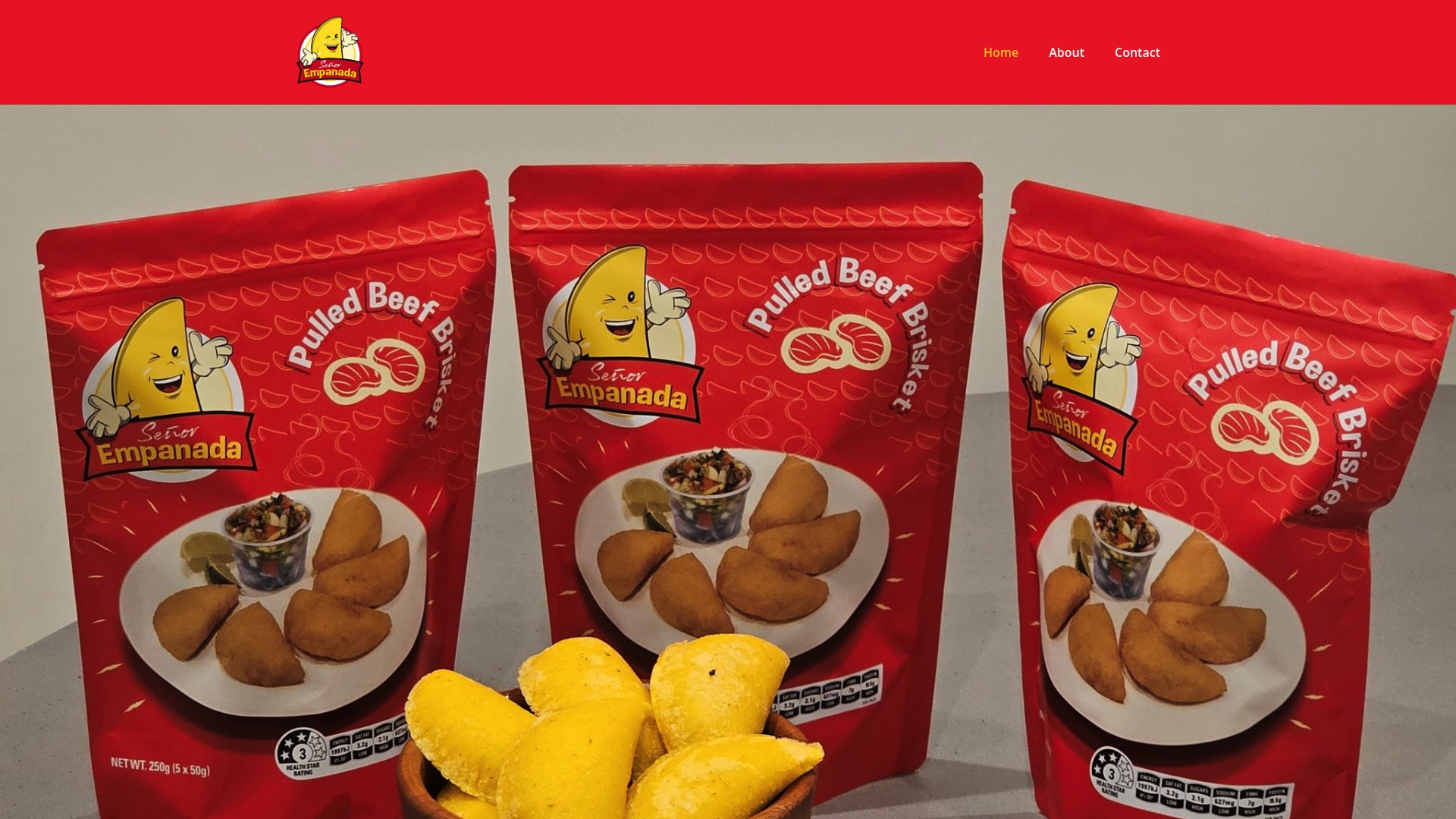
For a party or family gathering, our Latin appetiser platters are built for exactly this kind of pairing: warm, crisp empanadas on one side, a bowl of your fresh aji amarillo sauce on the other, and guests grazing happily between the two. It’s an easy way to bring authentic Latin flavour to the table without spending the whole afternoon in the kitchen. If you’d rather order ready-made snacks for your next gathering, check out our kids party snacks and Latin flavour options and get your order sorted before the weekend rush.
Sources
- Spice Hunting: Aji Amarillo
- Aji Amarillo (pepperscale)
- Peruvian yellow sauce for chicken (salsa de aji amarillo) – Irene Mercadal
FAQ
What is aji amarillo sauce made of?
It’s typically made from aji amarillo paste blended with a creamy base such as mayonnaise, Greek yoghurt, evaporated milk or queso fresco, plus garlic and fresh lime juice for balance.
What does aji amarillo taste like?
It has a fruity, almost sun ripened flavour with a medium heat estimated to be comparable to a serrano pepper, which is why Peruvian cooks treat it as a flavour ingredient first.
What is a good substitute for aji amarillo sauce?
A blend of yellow bell pepper, a small mild hot pepper such as a habanero, and a pinch of smoked paprika approximates the colour and some heat, though it won’t fully match the pepper’s fruity complexity.
How spicy is aji amarillo sauce?
The sauce itself is usually milder than the raw pepper because the cream base buffers the heat; you can dial it down further by using less paste or adding extra dairy, or increase it by adding more paste and skipping the cream dilution.
Can I make aji amarillo sauce without dairy?
Yes. Swapping mayonnaise for a cashew cream or avocado base gives a similar richness without dairy, though the texture will be slightly less silky and the flavour a touch nuttier.