Arepas de choclo are sweet Colombian corn cakes made from fresh or sweet corn masa, cooked on a griddle until the outside turns golden and the inside stays soft and tender. The traditional version arrives at the table topped with a slice of soft white cheese, its sweetness meeting that cheese’s gentle salt. On the stove, expect a few minutes per side before you’re holding a warm, cake-like arepa ready to eat.
TL;DR:
- Arepas de choclo use fresh or sweet corn, resulting in a soft, moist texture that differs from the firmer, dry-corn arepas made with masarepa.
- The batter’s consistency is crucial; it should hold shape but not be too wet or dry, requiring adjustments with masarepa or milk and resting for five to ten minutes.
- Proper heat management involves cooking over medium-low heat until the center sets, then increasing heat briefly to develop a golden crust without burning.
- Traditional toppings include soft white cheese like queso blanco, and they can be served with sweet or savory fillings for breakfast, snack, or meal.
- Storage in the fridge lasts three to four days, and freezing with parchment layers extends shelf life up to a month, with reheating in a pan restoring crispness better than the microwave.
Table of Contents
- What are arepas de choclo and how do they differ from other corn cakes?
- Ingredients, quantities and smart substitutions
- Step-by-step recipe: mixing, resting, shaping and griddling
- Technique and troubleshooting: moisture, batter consistency and flipping without breakage
- What to serve with arepas de choclo
- Storage, freezing and reheating
- Señor Empanada’s note on authenticity and kitchen pragmatism
- A ready-made option when you’d rather skip the griddle
- FAQ
- Sources
What are arepas de choclo and how do they differ from other corn cakes?
We think of arepas de choclo as the gentler, sweeter cousin of the classic Colombian arepa. They come from the Andean highlands, where fresh corn, known locally as choclo, grows abundantly and gets folded straight into the batter rather than dried and ground first. You’ll also hear them called arepa de chócolo or arepa de maíz tierno, depending on which region you’re in.
The defining difference comes down to the corn itself. Standard arepas use masarepa, a pre-cooked, dried corn flour that produces a firmer, more neutral-tasting cake. Arepas de choclo use fresh or sweet corn kernels, which carry natural sugars and extra moisture into the batter. That moisture is what gives these arepas their signature soft, almost pudding-like centre, a texture you simply can’t get from dry-corn versions.
- Arepas de choclo: made from fresh or sweet corn, naturally sweet, soft and moist inside.
- Standard masarepa arepas: firmer, more neutral in flavour, better suited to splitting and filling.
- Venezuelan cachapas: a close cousin using a similar fresh-corn batter, though usually thinner and folded around cheese like a pancake.
If you want to compare the dry-corn version in more depth, our guide on how to make arepas at home walks through that traditional method, and our breakdown of arepas versus pupusas covers how Colombian corn cakes differ from their Central American relatives.
Ingredients, quantities and smart substitutions
The ingredient list for arepas de choclo is short, but the quality of your corn makes or breaks the result. A classic batter blends fresh corn kernels with butter, a touch of sugar or panela, salt, and sometimes a small amount of masarepa or egg to help the batter hold together on the griddle.
- Fresh corn kernels (around 4 cups) or thawed frozen sweet corn, well drained.
- Masarepa, roughly a quarter to a fifth of your corn volume, added gradually to firm the batter.
- Butter, a tablespoon or two, plus sugar or grated panela to taste.
- A pinch of salt, and an optional egg or splash of milk for extra structure.
- Queso blanco, queso fresco or a similar soft white cheese for serving.
When fresh corn isn’t in season, a reliable swap is fine polenta mixed with a little extra sugar, or thawed frozen corn kernels combined with extra masarepa to make up for lost sweetness and body. Many Australian grocers stock haloumi or a mild feta as a reasonable stand-in for quesito if you can’t find Colombian queso fresco. Choose corn at the milk stage, plump and juicy when you press a kernel, rather than starchy mature cobs. Avoid canned creamed corn altogether, since its added liquid and starch stop the batter from setting properly on the pan.
Pro Tip: Squeeze a handful of raw kernels between your fingers before blending: if a milky liquid releases easily, the corn is sweet enough for a proper arepa de choclo.

If you’re cooking for someone avoiding gluten, our notes on gluten-free arepas cover which corn products are safe and which to double-check.
Step-by-step recipe: mixing, resting, shaping and griddling
Getting the batter right starts with how you break down the corn. Blend fresh kernels in short pulses rather than a long continuous run, so you keep some texture instead of a completely smooth puree. If you’re using a grater instead of a blender, grate directly over a bowl to catch every drop of juice, since that liquid carries much of the natural sweetness.
Once blended, fold in your butter, sugar or panela, and salt, then add masarepa a tablespoon at a time until the mixture thickens into a batter that holds its shape on a spoon rather than running off. Let it rest for five to ten minutes. This short rest lets the masarepa fully hydrate and the corn starches settle, which makes shaping far easier.
- Blend or grate the corn, reserving all the juice that comes off.
- Mix in butter, sugar or panela and salt, then add masarepa gradually until the batter holds its shape.
- Rest the batter for five to ten minutes before shaping.
- Shape portions roughly 10 centimetres across and about 1.5 centimetres thick, using damp hands to prevent sticking.
- Griddle over medium-low heat for 3 to 5 minutes per side until golden, then raise the heat briefly to finish the crust.
- Rest the cooked arepas for a minute before serving with cheese.
A typical batch from fresh corn to finished arepa takes 25 to 45 minutes from start to finish, including resting and cooking time, which makes this a realistic weeknight project rather than an all-day affair.
Prep time: 15 minutes | Rest time: 5 to 10 minutes | Cook time: 10 minutes | Total: 25 to 45 minutes | Serves: 4 to 6
Use a well-seasoned cast iron or non-stick pan, and lean towards butter over oil for the flavour it adds to that golden crust. A moderate, steady heat does more work than a hot pan here: push the temperature too high too early and you’ll scorch the outside before the centre sets. Some cooks finish the arepas in the oven under a brief broil once they’ve set on the stovetop, which deepens the colour without drying out that tender middle, a technique worth trying if your stovetop runs uneven.

Technique and troubleshooting: moisture, batter consistency and flipping without breakage
Most arepa de choclo problems trace back to one thing: batter consistency. The test is simple. A spoonful should hold its shape for a couple of seconds before slowly smoothing out at the edges. If it runs off the spoon immediately, it’s too thin. If it sits in a stiff, dry mound, it’s too firm.
- Batter too wet: add masarepa a tablespoon at a time, resting between additions to let it absorb.
- Batter too dry or crumbly: add a splash of milk or reserved corn juice until it loosens.
- Arepas splitting when flipped: the pan is too hot too soon, or the batter hasn’t rested long enough to bind.
- Pale, undercooked crust: raise the heat only in the final minute of cooking, never from the start.
The heat-management principle that Colombian home cooks rely on is patience first: cook over medium-low heat until the centre sets and the edges firm up, then increase the heat briefly to caramelise the crust. Rushing that sequence is the single most common cause of an arepa that falls apart mid-flip.
Pro Tip: If an arepa cracks as you flip it, don’t force it back together. Press the crack gently with a spatula against the pan, and the residual heat will usually re-seal it before the second side finishes cooking.

What to serve with arepas de choclo
Arepas de choclo are built for simplicity. The traditional pairing is a slice of queso blanco or quesito laid straight on top while the arepa is still warm, so the cheese softens slightly from the heat. A mug of coffee, hot chocolate or aguapanela rounds out a classic Colombian breakfast.
- Savoury: fold with extra cheese, sliced avocado or a spoonful of hogao for a heartier meal.
- Sweet: finish with arequipe (dulce de leche) or your favourite jam for a dessert-style arepa.
- Breakfast or snack: smaller arepas suit a quick snack, while larger ones with cheese work well as a weekend breakfast.
For more structured breakfast ideas built around arepas, our arepas for breakfast guide has portioning and timing suggestions worth a look.
Storage, freezing and reheating
Cooked arepas de choclo keep well in the fridge for three to four days in an airtight container. For longer storage, freeze them with a sheet of parchment paper between each layer to stop them sticking together, and they’ll hold their texture for roughly a month in the freezer.
- Fridge: store in an airtight container for 3 to 4 days.
- Freezer: layer with parchment, freeze for up to a month, and thaw in the fridge overnight before reheating.
- Best reheat: a dry pan over medium heat restores the crisp exterior better than a microwave, which tends to leave the crust soft and a little soggy.
Our dedicated guide to reheating arepas covers pan, oven and toaster-oven methods in more detail if you’re working through a frozen batch.
Señor Empanada’s note on authenticity and kitchen pragmatism
Every recipe we test starts from the same place: how it’s made in Colombian kitchens, not how it photographs. Fresh corn varies with the season, ovens run hot or cold depending on the house, and masarepa brands behave slightly differently from bag to bag. What we’ve learned through repeated batches is that the technique matters more than exact measurements. Trust the batter’s feel, respect the resting time, and the flavour takes care of itself. Give this recipe a go in your own kitchen, and we’d genuinely love to hear how your batch turns out.
— Senor Empanada
A ready-made option when you’d rather skip the griddle
Making arepas de choclo from scratch rewards patience, but we know not every night allows for blending corn and babysitting a griddle. That’s exactly where we come in: our catalogue of Latin American snacks, including arepas alongside empanadas and sauces, offers an authentic option without the prep. We built our offering around the premium, locally sourced ingredients principle that defines a good homemade batch, just ready sooner.
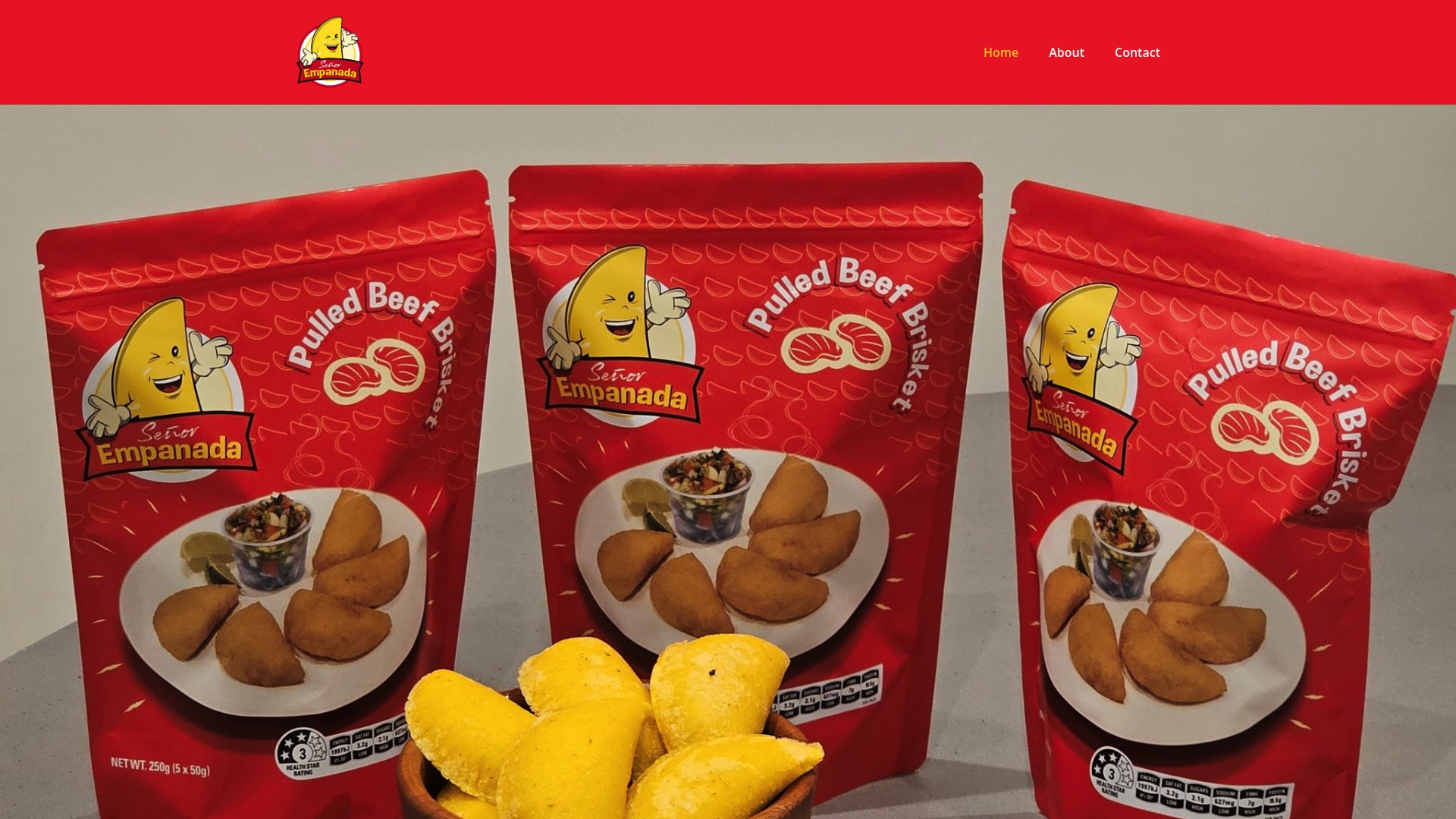
Whether you’re feeding a family on a weeknight or catering a gathering where you’d rather not be tied to the stove all evening, a ready-made range can cover both without asking you to compromise on flavour.
| Reader situation | Why our range fits |
|---|---|
| Weeknight dinner, limited time | Ready-made arepas and empanadas skip the blending and resting steps |
| Hosting an event or gathering | Catering options bring consistent, authentic Latin snacks to your table |
| Craving the flavour without the equipment | Online ordering delivers the taste without a griddle or blender |
Browse our full range of empanadas and sauces to see what’s available, or read our how-to guide on making arepas at home if you’re keen to try the stovetop version first.
FAQ
What are the ingredients for making arepas de choclo?
Arepas de choclo are made from fresh or sweet corn kernels, butter, sugar or panela, salt, and sometimes a small amount of masarepa or egg to help the batter hold together. They’re traditionally served with a slice of soft white cheese such as quesito or queso fresco on top.
What did Mirabel’s mum make in Encanto?
In the film, Mirabel’s mother is shown baking throughout the story, with arepas appearing as part of the family’s everyday Colombian cooking rather than as a specific recipe moment. The film reflects general Colombian food culture rather than a documented dish list.
What are arepas called in English?
There’s no direct English translation; arepas are usually just called “arepas” or described as corn cakes. Arepas de choclo specifically are often translated as sweet corn arepas or sweet corn cakes to distinguish them from the firmer, dry-corn version.
Is arepa healthier than bread?
This depends on the specific arepa and bread being compared, since ingredients, portion size and added fats vary widely between recipes. Rather than a blanket health claim, it’s more useful to compare the actual ingredients list of your arepa against your usual bread.
Sources
- Arepas de Choclo (Colombian Corn Cakes) – My Colombian Recipes
- Arepas de Choclo: Receta tradicional de la zona andina
- Arepas de Choclo (Sweet Corn Arepas) – At the Immigrant’s Table