
Bake standard empanadas at 375°F to 400°F (190°C to 205°C) for 20 to 25 minutes, and mini empanadas at 400°F (205°C) for 15 to 18 minutes. The main sign they’re ready is a deep golden brown crust with no pale patches. Frozen empanadas need an extra 5 to 10 minutes straight from the freezer, and if your filling has raw meat, check the internal temperature with a thermometer rather than trusting colour alone.
TL;DR:
- Using cold, pre-cooked filling reduces baking time and prevents sogginess, while raw meat requires a two-stage bake or internal temperature check.
- Frozen empanadas should be baked directly from the freezer with an additional 5 to 10 minutes and are best reheated in the oven or air fryer to maintain crispness.
- A preheated pizza stone or steel significantly improves crust crispness by providing immediate bottom heat, especially for raw-meat fillings.
- Overly wet fillings, insufficient chilling, overfilling, and oven hot spots are common mistakes that lead to soggy centers and uneven baking.
- Bake small empanadas at 400°F (205°C) for 15-18 minutes, and larger, fully cooked fillings at 375°F to 400°F (190-205°C) for 20-25 minutes for best results.
Table of Contents
- How long to bake empanadas: timing by size and filling
- What actually changes your empanada baking time
- The step-by-step method for evenly baked, crisp empanadas
- Common empanada baking mistakes and how to fix them
- Baking from frozen and reheating leftovers
- Advanced techniques for a restaurant-quality crust
- Resting, storing and keeping empanadas fresh
- Baking versus frying: what we’d tell a friend
- When it’s easier to order than to bake
- Sources
- FAQ
How long to bake empanadas: timing by size and filling
Getting baked empanadas time right comes down to two variables you control before the tray even goes in: size and filling. Everything else, oven quirks included, is a smaller adjustment on top of those two.
Mini empanadas, the 2 to 3 inch party-size ones, cook fastest because there’s less dough and filling to heat through. Standard 4 to 5 inch empanadas, the kind most of us grew up eating as a meal rather than a snack, need a longer stay in the oven and a filling that’s already fully cooked before assembly.
| Empanada type | Oven temperature | Bake time | Doneness check |
|---|---|---|---|
| Mini (2–3 inch) | 400°F / 205°C | 15–18 minutes | Golden brown, visual check |
| Standard (4–5 inch), pre-cooked filling | 375–400°F / 190–205°C | 20–25 minutes | Golden brown crust |
| Standard, raw ground-meat filling | 400°F to start, then 350°F / 205°C then 175°C | 25–30 minutes | Internal temperature check |
| Frozen (unbaked), any size | Same as fresh | Add 5–10 minutes | Golden brown, no pale centre |
A few things shift these numbers in practice:
- Raw ground-meat filling needs extra time or a two-stage bake, because the centre has to reach a safe temperature while the crust doesn’t burn waiting for it.
- Frozen empanadas go straight from the freezer to a preheated tray. Skip the thaw and just add time.
- Convection ovens cook faster thanks to circulating air, so drop the temperature by about 15°F (15°C) or start checking a few minutes earlier than the recipe suggests.
- Egg-washed empanadas brown faster on top than unwashed ones, so watch the top crust closely in the last five minutes regardless of size.
Think of this table as your starting point, not gospel. Oven calibration varies more than most home cooks realise, which is exactly why the next section covers what’s really driving that timer.
What actually changes your empanada baking time
Dough and filling do most of the work before your oven even gets involved, and getting this part right is what separates a soggy centre from a crisp, golden shell.
Fat content in the dough matters more than most recipes admit. A buttery, richer dough browns noticeably faster than a leaner, water-based dough, because fat conducts and holds heat differently at the surface. If you’re using a buttery empanada pastry, watch the crust a few minutes earlier than the timer suggests, or you’ll end up with an overbrowned shell before the filling’s properly hot.
Cold, pre-cooked filling shortens your time in the oven. A filling that’s already been simmered, cooled, and portioned only needs to reheat through, while a filling assembled straight off the stove while still hot risks steaming the dough from the inside, which is a leading cause of soggy bottoms.
Before baking, a few prep steps make a real difference:
- Brush with a whole egg for a deep, glossy brown, egg yolk alone for richer colour with less shine, or egg plus a splash of water for a lighter, more even wash.
- Chill assembled empanadas for at least 20 to 30 minutes before they go in the oven. Chilling firms up the fat in the dough, which stops them spreading in the heat and gives you a flakier, more evenly browned result.
- Seal edges firmly with a fork or a pleated crimp so filling and juices can’t escape and create a mess on the tray, which slows even browning around the leak point.
Pro Tip: If you’re short on fridge space, chill the empanadas on the tray you plan to bake them on. You save a step, and the tray goes straight into the oven the moment it’s hot.
The step-by-step method for evenly baked, crisp empanadas
Follow this sequence and you’ll get consistent results whether you’re baking a dozen for dinner or eighty for a party platter.
- Preheat fully, no shortcuts. Give your oven a genuine 15-minute to 20 minutes to reach 375°F to 400°F (190°C to 205°C) before the tray goes in. An oven that hasn’t finished heating sets the crust too slowly, and a slow-setting crust is how you end up with a soggy base. Recipes with raw meat fillings call for a temperature check rather than a guess, and an instant-read thermometer inserted into the thickest part of the filling should read at least 165°F (74°C).
- Cover with foil if the top browns too early. A loose sheet of foil over the tray stops the crust from darkening further while the filling finishes heating, without drying out the pastry.
- Rotate the tray halfway through. Most home ovens have at least one hot spot, so turning the tray 180 degrees at the halfway point evens out the browning across the whole batch.
Around 20 to 25 minutes is the window where most standard empanadas cross from “pale and doughy” to “properly golden,” which is a narrower gap than many home cooks expect. That’s also why a thermometer earns its place on the bench: the difference between an underdone centre and an overbaked crust can be as little as two or three minutes, and colour alone can lie if your oven runs hot at the top and cool at the bottom.
If you’re baking a large batch across two trays, don’t just set a single timer and forget about it. Swap the trays between racks halfway through, because the one closer to the element will almost always finish first.

Common empanada baking mistakes and how to fix them
Most baking failures trace back to moisture, sealing, or skipped chilling, and every one of them adds time or ruins texture if left unchecked.
Too-wet filling is the number one cause of a soggy base. If your filling looks glossy with liquid pooling at the bottom of the bowl, it will steam your pastry from the inside no matter how hot your oven is. Drain excess liquid before assembly, simmer saucy fillings a little longer to reduce them, and always let the filling cool to room temperature before you spoon it into the dough.

Overfilling and weak seals cause leaks that extend your bake. A burst empanada spills filling onto the tray, which then burns and smokes while the empanada itself sits half-exposed and cooks unevenly. Stick to roughly two tablespoons of filling per standard empanada and press seals firmly with a fork or a proper pleated crimp.
Skipping the chill step means dough that spreads in the oven. Unchilled dough softens quickly under heat, loses its shape, and often needs longer in the oven to brown evenly because it’s spread thinner than intended.
Uneven browning almost always comes down to oven hot spots. Rotate your tray halfway through the bake, and if one rack consistently runs hotter, swap positions for the second half rather than accepting a patchy result.
Pro Tip: If you keep getting a soggy centre despite dry filling, it’s often the dough thickness, not the filling. Roll it no thicker than 3mm; anything thicker takes longer to cook through and traps steam against the filling.
Baking from frozen and reheating leftovers
Bake unbaked frozen empanadas straight from the freezer, no thawing required. Place them directly on a preheated tray and add roughly 5 to 10 minutes to your normal bake time, depending on their size. Thawing first might seem like it would save time, but it usually makes the dough soggier as condensation forms on the surface before it even hits the oven.
For empanadas you’ve already baked and want to bring back to life, the oven is your best friend and the microwave is your worst enemy.
- Reheat baked empanadas in an oven at 350°F (175°C) for 8 to 12 minutes, which restores a crisp crust far better than any other method.
- An air fryer works nearly as well in a fraction of the time, usually just 3 to 4 minutes at a similar temperature.
- Skip the microwave if crispness matters to you. It heats the filling quickly but turns the pastry limp and chewy within seconds, and there’s no fixing that texture once it happens.
- If you’re reheating a large batch, spread them out on the tray rather than stacking, so hot air reaches every side evenly.
Advanced techniques for a restaurant-quality crust
Preheating a pizza stone or baking steel is the single biggest upgrade you can make to your home setup. A stone or steel absorbs and holds heat far better than a standard tray, and when a cold empanada hits that surface, it gets an immediate blast of bottom heat that sets the base fast and locks in crispness before any steam can build up underneath. This is the same principle professional kitchens rely on to avoid the soggy-bottom problem entirely.
For raw-meat fillings, the two-stage bake is worth learning properly. Start at a higher temperature, around 400°F (205°C), for the first 10 minutes to set the crust quickly, then drop to 350°F (175°C) for the remaining time so the centre catches up without overbrowning the shell. It’s a small technique that solves a genuinely common problem: a beautifully golden empanada with a filling that’s still lukewarm in the middle.
A thermometer is the only truly reliable doneness check when raw meat is involved. Colour tells you what the crust is doing; internal temperature tells you what the filling is actually doing, and those two things don’t always move at the same pace.
If you want to go deeper on the pastry itself, our authentic empanada pastry guide covers the fat ratios and folding technique that shape how a dough browns and holds together in the oven. For readers curious about regional filling variations that pair well with these techniques, La Condesa’s cochinita pibil recipe is worth a look for inspiration outside the usual beef and cheese fillings.
Pro Tip: If you don’t own a stone or steel, a heavy cast-iron pan preheated in the oven for 15 minutes gives you a similar effect for a small batch.
Resting, storing and keeping empanadas fresh
Let empanadas rest for 3 to 5 minutes straight out of the oven before cutting into one. The filling is still finishing its internal cook and settling, and cutting too early lets steam and juices escape, leaving you with a drier bite than the empanada actually is.
- Refrigerate baked empanadas in an airtight container for up to 3 days.
- Freeze unbaked empanadas by flash-freezing them on a tray until firm, then transferring to a bag. This stops them sticking together.
- Freeze baked empanadas too if you prefer, just label the bag with the date so you’re not guessing later.
- Reheat from the fridge or freezer in the oven, not the microwave, to keep the crust properly crisp.
Baking versus frying: what we’d tell a friend
Baking wins for most home cooks, and it’s not close. You get consistent results across a full tray at once, there’s no hot oil to manage, and cleanup takes a fraction of the time frying demands. For a family dinner or a weeknight batch, baked empanadas time is predictable enough that you can plan the rest of the meal around it with confidence.

Frying still has its place if pure textural crunch is the goal. A fried empanada has a shatter to the crust that baking can’t quite replicate, no matter how good your stone or steel setup is. If you’re making a small batch for yourself and want that specific bite, frying earns its extra mess and attention.
For anyone hosting a bigger gathering, though, baking is the more forgiving choice, and there’s a third option worth considering: skip the oven altogether. When time is tighter than usual or the guest list has grown past what a home tray can comfortably manage, ordering ready-made empanadas can give you an authentic result without the timing pressure.
— Senor Empanada
When it’s easier to order than to bake
Sometimes the smartest kitchen decision is knowing when not to cook. Ready-to-eat empanadas made using traditional recipes and quality ingredients provide a golden, properly-cooked crust without watching a timer.
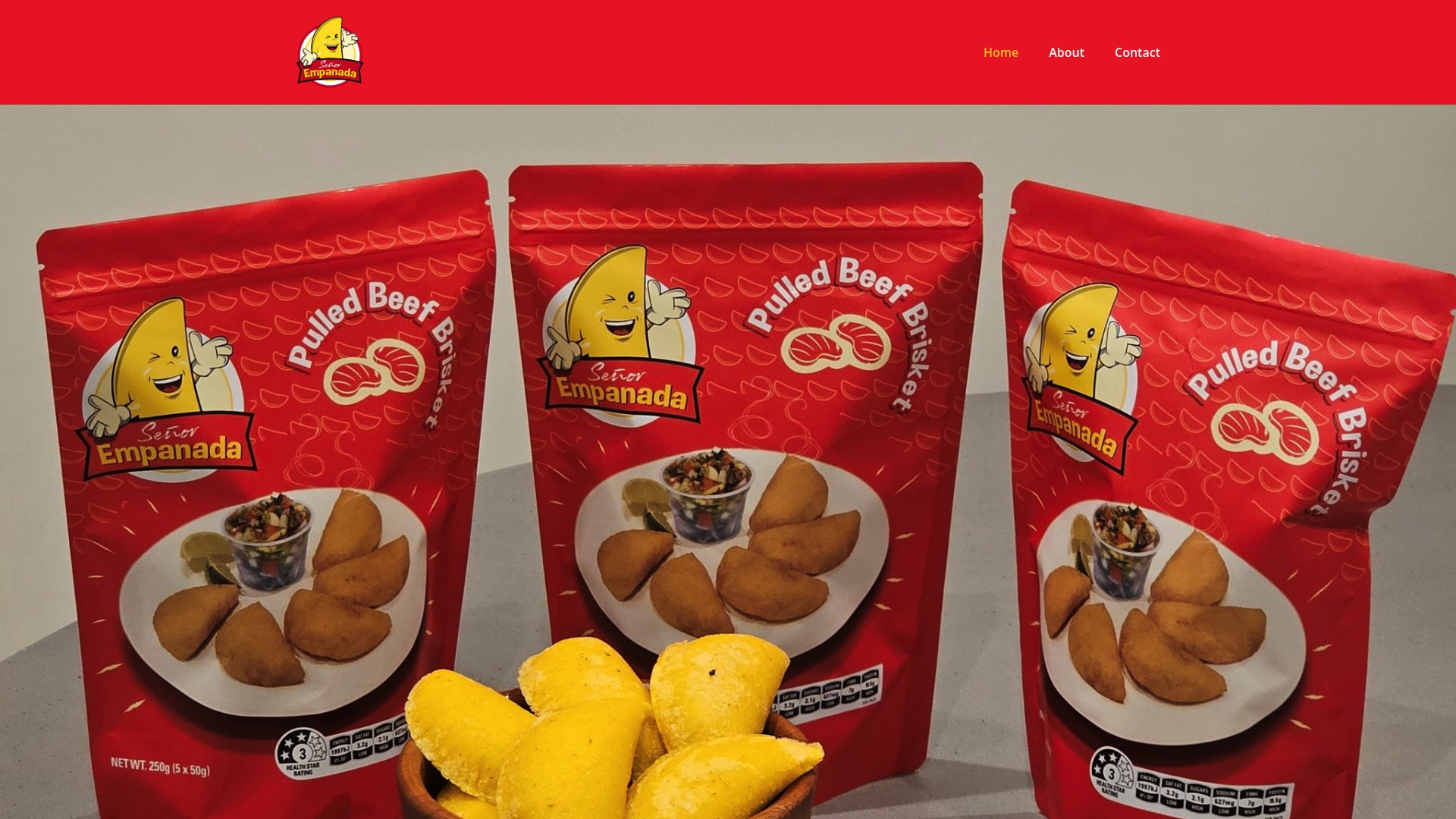
Ordering makes the most sense when you’re catering an event, feeding a crowd larger than one tray can handle, or simply don’t have the 40 minutes of prep and bake time a fresh batch demands on a busy weeknight. Professional suppliers can handle volume and consistency to deliver empanadas that come out golden, properly filled, and ready to serve without soggy bottoms. If you’re planning a birthday, a work event, or just want snacks sorted for a weekend get-together, check out our kids party snacks range and place an order ahead of your date.
Sources
FAQ
Can I bake empanadas instead of frying them?
Yes. Baking at 375°F to 400°F (190°C to 205°C) for 20 to 25 minutes gives a fully cooked, golden crust without the oil and mess of frying, though the texture is slightly less crisp than a deep-fried shell.
Is it better to bake or fry empanadas?
Baking is the more practical choice for most home cooks because it’s safer, easier to scale for a crowd, and needs far less cleanup, while frying delivers a crunchier crust at the cost of extra oil, mess, and attention.
How do you know when empanadas are done?
Look for a deep golden brown crust with no pale patches, and if the filling contains raw meat, confirm with an instant-read thermometer reading at least 165°F (74°C) in the centre.
What are the most common mistakes when making empanadas?
The biggest culprits are filling that’s too wet, overfilling that causes seals to burst, skipping the chill step before baking, and uneven oven heat that browns one side faster than the other.
How long should I bake mini empanadas versus standard-size ones?
Mini empanadas (2 to 3 inches) need 15 to 18 minutes at 400°F (205°C), while standard 4 to 5 inch empanadas need 20 to 25 minutes at 375°F to 400°F (190°C to 205°C).