
Gluten-free empanada dough, known in Latin cooking as masa para empanada gluten free, is a specialised pastry made with gluten-free flour blends and binding agents to replicate the pliability and tenderness of traditional wheat dough. Getting it right is absolutely achievable. The secret lies in three things: a quality 1:1 gluten-free flour blend containing rice flour and tapioca starch, a reliable binding agent like xanthan gum, and disciplined temperature control throughout the process. This guide walks you through every stage, from choosing your ingredients to troubleshooting a cracked crust, so you can produce empanadas that hold together beautifully whether you bake or fry them.
What ingredients are essential for gluten-free empanada dough?
A quality 1:1 gluten-free flour blend is the foundation of any successful gluten-free pastry for empanadas. These blends typically combine rice flour, tapioca starch, and sometimes potato starch to create a base that mimics wheat dough texture with a high rate of success. The ratio of starches in your blend directly determines how tender or crisp your finished pastry will be.
Binding agents are non-negotiable. Without xanthan gum or psyllium husk, gluten-free dough lacks the elasticity needed to roll and fold without cracking. Use 1 teaspoon of xanthan gum per 250g of flour unless your blend already contains it. Check the packet before adding more, since doubling up produces a gummy, unpleasant texture.
Fat choice shapes the final result. Cold butter produces the flakiest layers, while lard gives a more traditional Latin flavour and a slightly softer bite. Ice-cold water and chilled butter are essential because warm fats melt prematurely and produce tough, dense dough instead of light, flaky pastry. Keep everything cold right up until you start mixing.
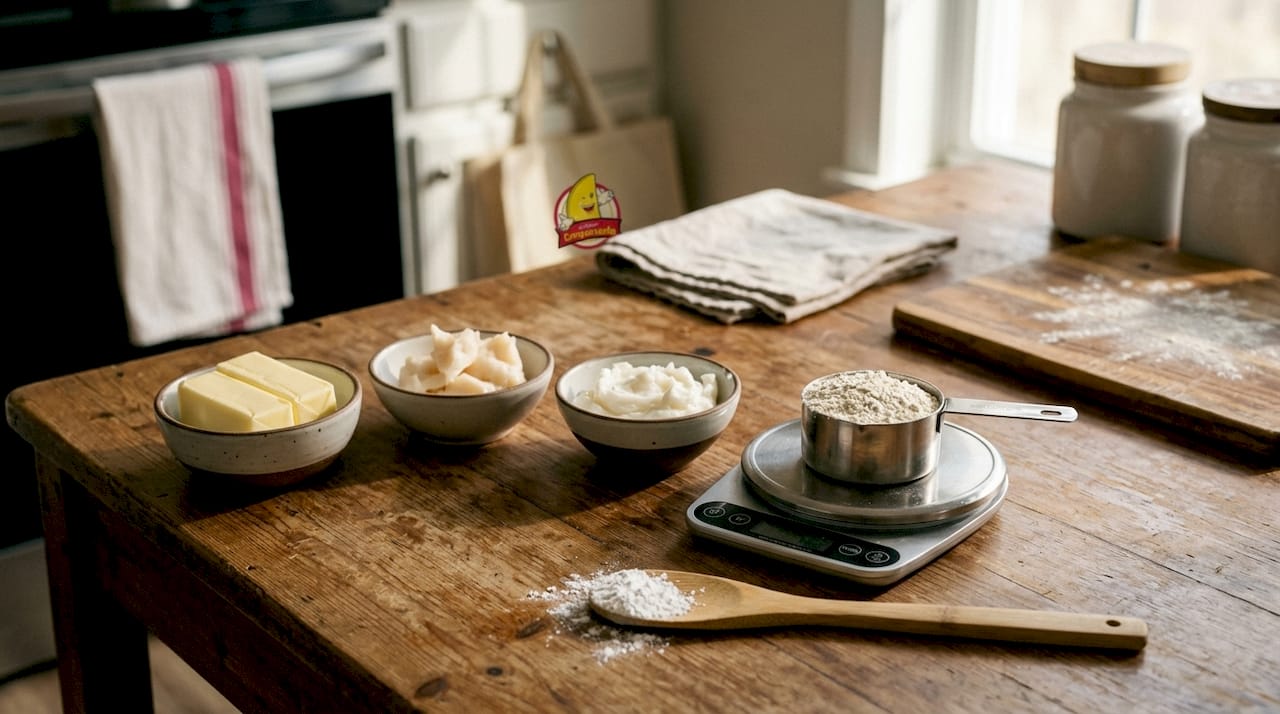
A small addition of white vinegar or buttermilk adds tenderness to baked empanadas by slightly relaxing the dough structure. One egg acts as both a binder within the dough and, beaten separately, as a wash that gives the pastry a deep golden colour in the oven.
Key ingredients at a glance:
- 1:1 gluten-free flour blend (rice flour and tapioca starch base)
- 1 tsp xanthan gum or psyllium husk (if not already in your blend)
- Cold butter or lard, cut into small cubes
- Ice-cold water, added gradually
- 1 egg (for dough structure and egg wash)
- 1 tsp white vinegar or a splash of buttermilk (for baked versions)
- Salt to taste
| Ingredient | Role in dough |
|---|---|
| Gluten-free flour blend | Provides structure and body |
| Xanthan gum | Replaces gluten elasticity |
| Cold butter or lard | Creates flaky, tender layers |
| Egg | Binds and adds richness |
| Vinegar or buttermilk | Tenderises baked pastry |
Pro Tip: Freeze your butter for 15 minutes before cutting it into the flour. Smaller, colder fat pieces create more distinct flaky layers in the finished pastry.
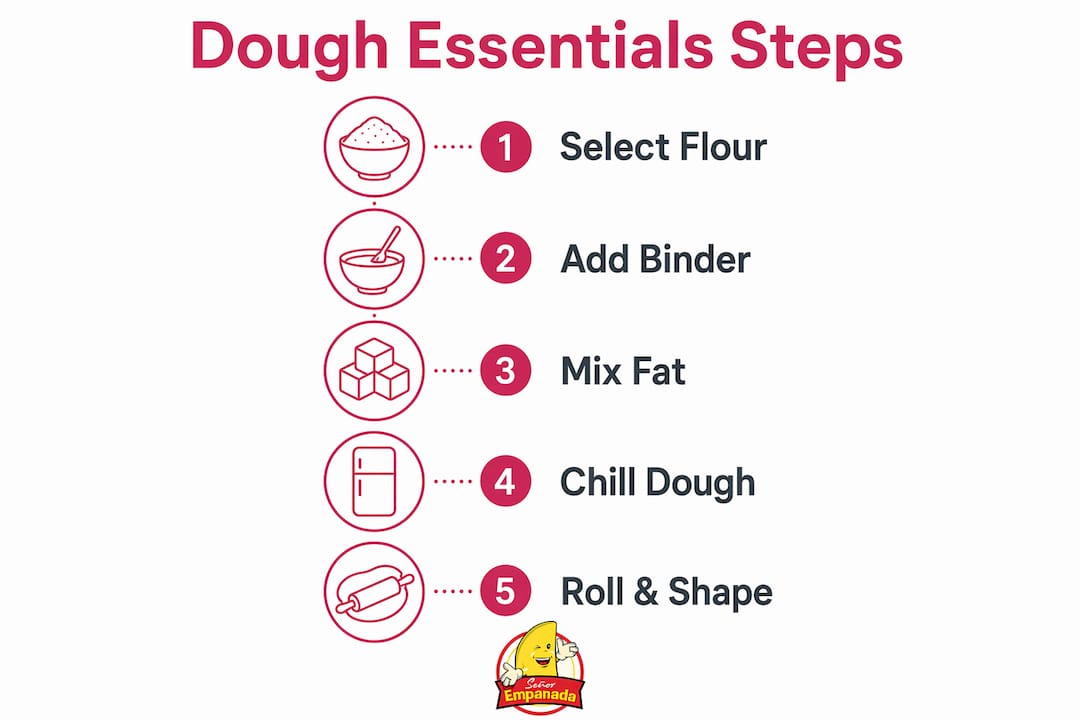
How do you prepare gluten-free empanada dough step by step?
Preparation follows a clear sequence, and skipping steps is the most common reason gluten-free dough fails. Follow these steps precisely for the best gluten-free empanada recipe results.
Combine dry ingredients. Whisk your gluten-free flour blend, xanthan gum, and salt together in a large bowl. Mixing the dry ingredients first distributes the binder evenly before any moisture is introduced.
Cut in the cold fat. Add your cold butter or lard cubes and rub them into the flour using your fingertips until the mixture resembles coarse breadcrumbs. Work quickly to keep the fat cold. Some visible pea-sized pieces of butter are desirable.
Add wet ingredients gradually. Beat the egg lightly and add it to the flour mixture along with the vinegar. Add ice-cold water one tablespoon at a time, mixing gently after each addition. Stop adding water the moment the dough comes together into a shaggy ball. Overworking at this stage toughens the pastry.
Chill the dough. Wrap the dough tightly in plastic wrap and refrigerate it for at least 30 minutes. Chilling firms the fats and makes the dough far more manageable to roll and cut. Total preparation time including chilling runs 45–60 minutes.
Roll between parchment. Place the chilled dough between two sheets of baking paper and roll to approximately 3mm thickness. Rolling between parchment sheets prevents the dough from sticking to the bench or tearing, which is the single most useful professional technique for handling gluten-free pastry.
Cut your rounds. Use a round cutter or a bowl rim to cut circles of 10–12cm diameter. Gather scraps gently, re-chill briefly, and re-roll once only. Repeated rolling dries the dough.
Fill and seal. Place a cooled filling in the centre of each round, leaving a 1.5cm border. Fold the dough over and press the edges firmly together. Crimp with a fork or fold a traditional rope edge. Brush the surface with beaten egg wash.
Bake or fry. For baking, cook at 190–205°C for 20–25 minutes until deep golden. For frying, heat oil to 180°C and cook for 3–4 minutes per side.
Adjustments for frying vs baking:
- Frying requires a slightly firmer dough with a lower liquid ratio to prevent the pastry absorbing excess oil.
- Baked empanadas benefit from vinegar added to the dough for extra tenderness and flakiness.
- Frying produces a crispier shell; baking yields a more golden, slightly drier crust.
Pro Tip: If your dough rounds crack at the edges when you fold them, let the dough sit at room temperature for 3–4 minutes before folding. Slightly warmer dough is more pliable at the sealing stage without compromising the overall structure.
What are the most common problems with gluten-free empanada dough?
Cracking is the most frequent complaint, and it almost always comes from one of two causes: insufficient hydration or dough that is too cold when you try to fold it. Add water one teaspoon at a time if your dough feels dry after chilling, and allow it to rest briefly at room temperature before sealing.
Embracing the naturally sticky, shaggy texture of gluten-free dough is the single biggest mindset shift home cooks need to make. Over-flouring to manage stickiness leads to dry, crumbly dough that cracks during rolling and falls apart in the oven. Trust the process and resist the urge to dust the bench heavily.
Sticky dough is not a sign that something has gone wrong. Handle it with lightly oiled hands or work entirely between parchment sheets. Adding extra flour to compensate for stickiness is the fastest route to a dry, cracked result.
Greasy or leaking pastries almost always trace back to filling temperature. Warm fillings weaken dough structure and cause the fat in the pastry to melt before the dough sets in the oven or fryer. Always cool your filling completely before assembly.
Common problems and fixes:
- Dough cracks when folding: Add a teaspoon of cold water and rest the dough for a few minutes before sealing.
- Dough is too sticky to handle: Work between parchment sheets or use lightly oiled hands. Do not add extra flour.
- Pastry is greasy or leaking: Cool the filling completely before placing it on the dough.
- Dough falls apart during frying: Reduce liquid slightly in the recipe and chill the assembled empanadas for 10 minutes before cooking.
- Pastry is tough rather than flaky: Fats were too warm during mixing. Chill butter and water more aggressively next time.
Pro Tip: Assemble your empanadas and refrigerate them for 10–15 minutes before baking or frying. This firms the dough back up after handling and dramatically reduces the risk of splitting during cooking.
How do you store, freeze, and reheat gluten-free empanadas?
Gluten-free empanadas store and freeze exceptionally well, making them ideal for batch cooking. The dough itself can be frozen as flat discs, which is the most space-efficient approach for Australian home kitchens where freezer space is often at a premium.
Storage and freezing guide:
- Uncooked dough discs: Stack between sheets of baking paper, place in an airtight container, and freeze for up to 2 months. Thaw overnight in the fridge before use.
- Assembled uncooked empanadas: Freeze on a tray until solid, then transfer to a zip-lock bag. Cook directly from frozen at 200°C for 28–30 minutes.
- Cooked empanadas: Refrigerate in an airtight container for up to 3 days. Reheat in an oven at 180°C for 10 minutes to restore crispness. Avoid microwaving, which makes gluten-free pastry soft and slightly gummy.
- Freezer life for cooked empanadas: Up to 3 months when well wrapped.
Pro Tip: Freeze assembled, uncooked empanadas rather than cooked ones whenever possible. Cooking from frozen gives you a fresher result with a crisper crust than reheating a previously cooked pastry.
What variations can you make to gluten-free empanada dough?
The base recipe is a starting point, not a fixed formula. Gluten-free empanada dough without gluten adapts readily to different dietary needs, flavour profiles, and cooking methods.
Egg-free and vegan options: Replace the egg in the dough with 1 tablespoon of ground flaxseed mixed with 3 tablespoons of water, rested for 5 minutes until gel-like. Use cold coconut oil or vegan butter in place of dairy butter. The result is slightly less rich but still holds together well.
Starch swaps and their effects: Tapioca starch provides stretchiness that mimics gluten more closely than corn or potato starch. Potato starch produces a softer, more pillowy texture suited to baked empanadas. Corn starch creates a crisper, more brittle shell that works well for frying. Blending two starches gives you the best of both worlds.
Flavour additions: Stir smoked paprika, cumin, or dried oregano directly into the dry ingredients for a dough that carries Latin flavour in every bite. Sesame seeds or nigella seeds pressed into the surface before baking add texture and visual appeal.
| Variation | Best use | Texture result |
|---|---|---|
| Tapioca starch base | Baking and frying | Stretchy, pliable |
| Potato starch base | Baking | Soft, pillowy |
| Corn starch base | Frying | Crisp, brittle |
| Vegan (flax egg) | Baking | Slightly denser |
| Spiced dough (paprika, cumin) | Baking or frying | Same structure, richer flavour |
Regional influences: Argentine-style dough tends to be richer, with more fat and a softer bite. Chilean empanada dough is typically thicker and more bread-like. Colombian and Venezuelan styles lean towards a corn-based dough, which is naturally gluten-free and produces a heartier, more rustic result.
Pro Tip: Add 1 teaspoon of apple cider vinegar to vegan dough recipes. It reacts with the raising agents and improves the dough’s overall tenderness without adding any detectable flavour.
Key takeaways
Gluten-free empanada dough succeeds when you use a quality flour blend with tapioca starch, add xanthan gum for elasticity, keep all fats and liquids cold, and chill the dough for at least 30 minutes before rolling.
| Point | Details |
|---|---|
| Use a quality flour blend | Choose a 1:1 blend with rice flour and tapioca starch for the best texture and structure. |
| Add a binding agent | Include 1 tsp xanthan gum or psyllium husk unless your blend already contains one. |
| Keep everything cold | Use ice-cold water and chilled butter to create flaky, tender layers in the finished pastry. |
| Chill before rolling | Rest dough in the fridge for at least 30 minutes to firm fats and improve handling. |
| Cool fillings completely | Warm fillings weaken dough structure and cause leaking or greasy pastry during cooking. |
Our honest take on gluten-free empanada dough
We have made a lot of empanadas at Senor Empanada, and the one thing we see home cooks struggle with most is the urge to treat gluten-free dough like wheat dough. They reach for more flour the moment things feel sticky. They skip the chill because they are in a hurry. They use room-temperature butter because it is easier to cut. Every one of those shortcuts produces a result that disappoints.
The truth is that gluten-free dough is more forgiving than its reputation suggests. It just asks for different habits. Cold ingredients, patience during chilling, and parchment paper as your best friend. Once you internalise those three things, the dough becomes genuinely manageable.
We have found that blending tapioca starch with a rice flour base gives the closest result to a traditional wheat pastry. The tapioca adds that slight chew and stretch that makes an empanada feel satisfying rather than brittle. If your current blend is producing crumbly results, switching to one with a higher tapioca content is the first thing to try before adjusting anything else.
Climate matters more than most recipes acknowledge. In a humid Australian summer kitchen, your dough will absorb moisture faster and may need slightly less liquid. In a dry winter kitchen, it may need a touch more. Treat the liquid quantity in any recipe as a guide, not a rule, and adjust by feel.
Gluten-free empanadas can absolutely match traditional versions in taste and texture. We believe that wholeheartedly. The process simply rewards care and attention more visibly than wheat dough does.
— Senor Empanada
Gluten-free empanadas made easy with Senor Empanada
Not every week allows time for making dough from scratch, and that is exactly why Senor Empanada exists. We craft our empanadas using traditional Latin American recipes and premium ingredients, so you get authentic flavour without the prep time.
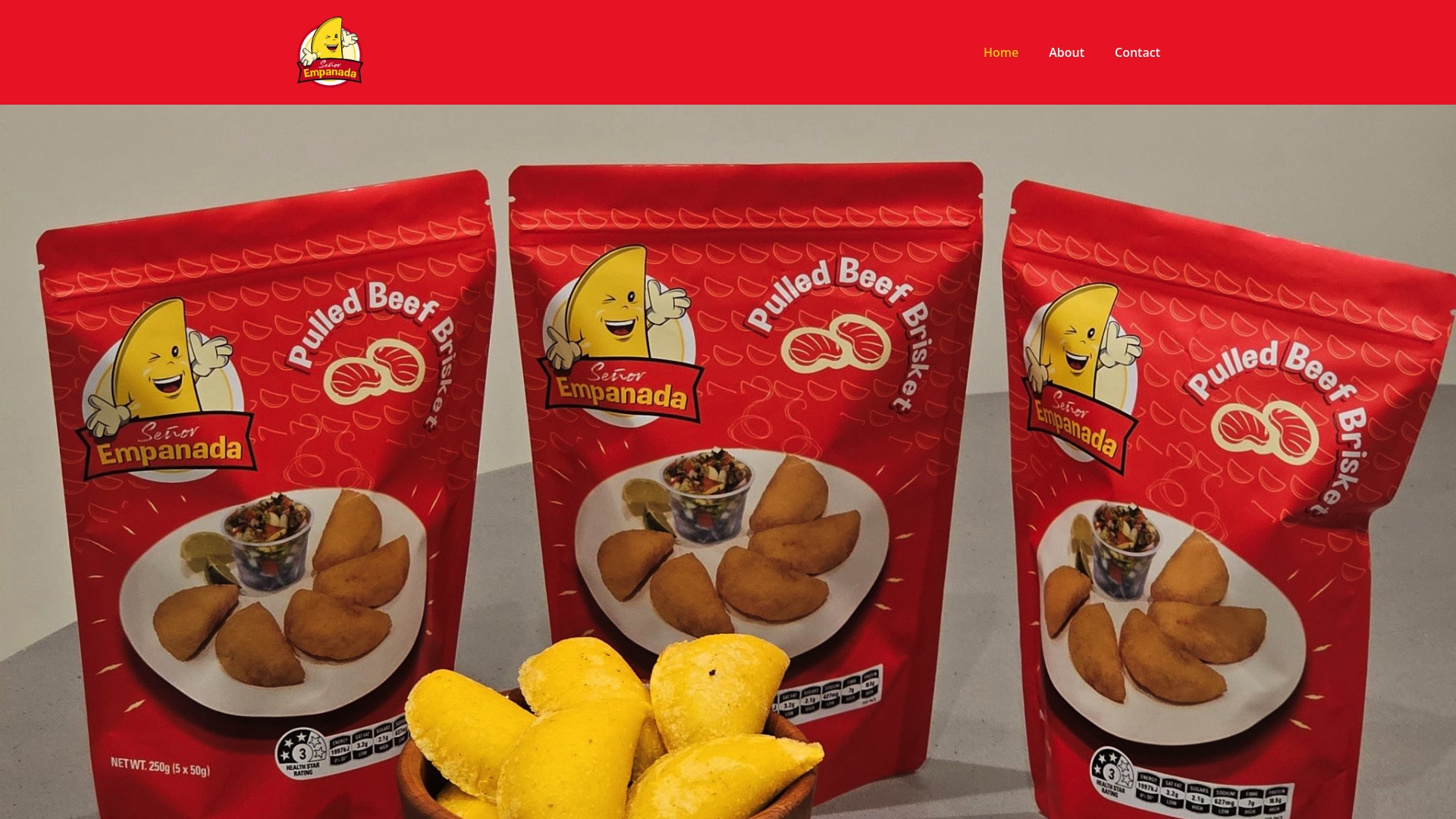
Whether you are after a ready-made option for a weeknight dinner or inspiration for your next gathering, Senor Empanada’s full range has you covered. From our Traditional Beef Empanada to our Cheesy Empanada and arepas, every product is made with the same care and cultural pride that goes into a homemade batch. Visit us at empanadas.au to browse our range and place an order for delivery across Australia.
FAQ
What flour works best for gluten-free empanada dough?
A 1:1 gluten-free flour blend containing rice flour and tapioca starch produces the best texture for gluten-free empanada dough. Tapioca starch is particularly important because it provides the stretchiness that mimics gluten elasticity.
Do I need xanthan gum in gluten-free empanada dough?
Yes, unless your flour blend already contains it. Without xanthan gum or psyllium husk, gluten-free dough lacks elasticity and cracks during rolling and baking.
How long should I chill gluten-free empanada dough?
Chill the dough for at least 30 minutes in the fridge before rolling. Chilling firms the fats and makes the dough significantly easier to handle and shape without tearing.
Can I freeze gluten-free empanada dough?
Yes. Freeze dough as flat discs between sheets of baking paper for up to 2 months. Thaw overnight in the fridge and roll as normal. Assembled uncooked empanadas can also be cooked directly from frozen at 200°C for 28–30 minutes.
What fillings work well in gluten-free empanadas?
Any cooled filling works well, provided it is not too wet. Classic options include seasoned beef mince, spiced chicken, cheese and corn, or roasted vegetables. Always cool the filling completely before assembly to prevent the dough from weakening or leaking during cooking.