The fastest way to move Latin flavour through your cabinet is simple: stock handheld, repeatable empanadas and arepas, add one sweet handheld, and back it with a bottled sauce for upsell. Empanadas travel, hold their heat and sell themselves on smell alone. Arepas cover the gluten-free customer without a compromise conversation. Señor Empanada is one wholesale route into this category for Australian cafés ready to move beyond muffins and banana bread.
TL;DR:
- Offering empanadas and arepas provides a portable, heat-retentive snack that appeals to both meat-eaters and gluten-free customers, with minimal prep.
- Wholesale supply via direct manufacturer like Señor Empanada ensures fresher stock, manageable minimum orders, and straightforward reheat requirements for cafés.
- Cafés must comply with food safety standards by appointing a supervisor, training staff, and maintaining traceability and temperature logs for unpackaged ready-to-eat Latin snacks.
- Pricing typically involves a 2 to 3 times markup for specialized Latin products, with strategic seasonal promotions and clear branding increasing sales and repeat visits.
- Grouping snacks by type and controlling reheating times optimizes presentation, shelf life, and customer satisfaction in a well-stocked cabinet.
Table of Contents
- What to offer: snack categories and how customers buy them
- Sourcing and wholesale: where to buy and what to expect
- Food safety and compliance for cafés selling ready-to-eat Latin snacks
- Pricing, margins and how to cost a snack for sale
- Merchandising, serving and operations: display, reheating and shelf life
- Ordering, stock rotation and basic logistics
- Seasonal snack offerings and promotions to boost sales
- Packaging options and branding tips for snacks sold in cafés
- What we’ve learned supplying cafés and events across Australia
- How Senor Empanada can supply your café or event
- Sources
- FAQ
What to offer: snack categories and how customers buy them
The best snacks to sell in cafes share three traits: they hold well in a cabinet, they reheat without drying out, and they photograph nicely on a counter. Empanadas tick every box. A traditional beef filling remains the biggest seller across most café counters, with cheese and vegetable options close behind for lunchtime variety. Single-serve portions (roughly 120 to 150 grams) work best for grab-and-go, while a warmed-to-order option suits cafés with a griddle or convection oven and a slightly slower morning rush.

Arepas solve a different problem. They’re naturally gluten-free, made from corn rather than wheat, and that positioning matters more each year as café customers ask about dietary flexibility before they order. Serve them split and filled with cheese or shredded meat, or offer them plain with a side of sauce for customers who want to build their own.
Beyond those two anchors, a well-run cabinet needs supporting categories:
- Small savoury pastries and baked snacks — good for rotating stock daily and keeping the cabinet visually full without overordering any single line.
- Sweet handhelds — a dulce de leche pastry or similar dessert option gives customers a reason to add a second item to their order.
- Bottled sauces and accompaniments — chimichurri or a spiced salsa sold alongside empanadas lifts average transaction value with almost no extra prep.
- Family and kids-friendly formats — smaller portions or milder fillings widen your customer base beyond the solo coffee run.
- High-protein options — beef and cheese empanadas naturally fit this brief, useful for cafés near gyms or office precincts where customers ask about protein content.
The category mix matters more than any single hero product. A cabinet with one empanada flavour, one arepa option, and one sweet item outperforms a cabinet crammed with five empanada varieties nobody can tell apart at a glance.
Sourcing and wholesale: where to buy and what to expect
Cafés generally choose between three supply routes. Broadline distributors carry Latin snacks alongside everyday pantry stock, letting you order everything on one account and one delivery run. Specialty importers focus purely on Latin American or ethnic food lines, often with better product range but a separate invoice to manage. Direct-from-manufacturer wholesale, the model Señor Empanada uses, cuts out the middle layer and usually gives you fresher stock rotation and more input into portion sizes.
A broadline distributor model genuinely simplifies life for a busy café: one supplier account means one delivery schedule and one invoice to reconcile each week, rather than juggling three or four separate supplier relationships for a handful of SKUs.
Before signing with any supplier, run through this checklist:
- Confirm price per unit at your expected order volume, not just the listed wholesale rate.
- Ask the minimum order quantity (MOQ) and whether it’s fixed per SKU or across your total order.
- Get a clear lead time in business days, including peak-season blowouts.
- Check refrigeration and cold-chain handling from their warehouse to your door.
- Request samples before committing to a standing order.
- Clarify the returns or credit policy for damaged or short-dated stock.
Food safety and compliance for cafés selling ready-to-eat Latin snacks
Any café selling unpackaged, ready-to-eat empanadas or arepas falls under Standard 3.2.2A, which extends food-safety management requirements to businesses handling potentially hazardous food. Whether you sit in category one or category two under this standard depends on your activities, not your business size or turnover, so a small café reheating meat-filled pastries can carry the same obligations as a larger kitchen.
Standard 3.2.2A applies to roughly every café that reheats or displays unpackaged hot food, regardless of headcount — the trigger is the activity, not the size of the operation.
Practically, that means:
- Appointing a certified Food Safety Supervisor if your council area or state requires one.
- Training staff on temperature control, handling and allergen awareness before they touch the cabinet.
- Displaying allergen information clearly, since most Latin snacks contain wheat, dairy or egg.
- Keeping supplier traceability records, an obligation NSW Food Authority guidance ties directly to council inspections.
- Logging temperature checks and being ready to trace a batch back to its supplier if a recall notice ever lands.
Councils inspect cafés against these rules routinely, and manufacturers or wholesalers supplying you must also notify the NSW Food Authority if wholesaling is their principal activity. Ask any new supplier whether they’ve done this.
Pricing, margins and how to cost a snack for sale
Cost your snacks the same way you’d cost a coffee: unit cost, plus labour to reheat and plate, plus packaging, plus a share of overhead, then apply your target margin on top. For a wholesale empanada costing a typical landed price, a retail price roughly two to three times that cost is common across Australian cafés, giving you room for labour and packaging while still sitting in the range customers expect for a handheld savoury item.
- Volume snacks (muffins, standard pastries) typically run a 100 to 150% markup.
- Specialty imported lines, including authentic Latin snacks, can support markups of 2 to 3 times cost because customers are paying for a point of difference they can’t get at the servo or supermarket.
- Bottled sauces and add-ons carry near-pure margin once the base product is on the shelf.
Pro Tip: Run a two-week combo test, empanada plus coffee at a small discount, and track whether average transaction value rises. If it doesn’t move the needle, drop the combo rather than propping it up with signage.
Merchandising, serving and operations: display, reheating and shelf life
Group snacks by type rather than scattering them across the cabinet. Customers buy with their eyes first, so a tight cluster of empanadas with a small chalkboard sign naming the fillings outsells the same product spread thin.
- Reheat empanadas and arepas to a safe core temperature and hold them no longer than the window your supplier or Food Safety Supervisor specifies, generally a couple of hours before quality drops.
- Use grease-resistant takeaway bags or boxes, and print allergen information directly on the label rather than relying on verbal counter advice.
- Store frozen stock at the temperature stated on the packaging and track use-by dates on a simple rotation sheet.
Ordering, stock rotation and basic logistics
Start with a small trial order, roughly what you’d sell in a week, and set a reorder point once you hit half that stock. For frozen-to-heat empanadas and arepas:
- Keep frozen stock at the supplier’s stated temperature until the day of use.
- Thaw only what you’ll reheat that shift, never the whole case at once.
- Ask your supplier for a fixed weekly delivery day once volume is predictable, it makes rostering and prep planning far easier.
Seasonal snack offerings and promotions to boost sales
Café traffic shifts with the seasons, and your snack cabinet should shift with it. Summer favours lighter, handheld options customers can eat on the move, cold arepas with fresh toppings or a smaller empanada portion that doesn’t feel heavy in the heat. Winter is empanada season proper: customers want something warm, filling and a little indulgent alongside a flat white, and a beef or cheese empanada served hot from the oven does exactly that.

Build simple promotions around the calendar rather than reinventing your menu every month. A “winter warmer” combo pairing a hot empanada with a coffee at a small discount works because it’s easy to explain at the counter and easy for staff to upsell without a script. Around major dates, Latin American independence celebrations in September, or even a general “fiesta Friday” theme, gives you a reason to push a limited-time sweet handheld or a spicier sauce pairing that wouldn’t earn shelf space year-round.
The seasonal menu planning approach that works for coffee menus applies just as well here: rotate two or three items seasonally, keep your core lineup stable, and use signage to signal scarcity. A snack that’s only available “this month” moves faster than one that’s always been on the counter. Track which seasonal items actually sell through and drop the ones that don’t earn their cabinet space by the second run.
Packaging options and branding tips for snacks sold in cafés
Packaging does two jobs at once: it keeps the empanada intact on the walk back to the office, and it tells the customer something about what they’re eating. A plain brown bag says nothing. A branded sleeve or stamped paper wrap with the filling name printed on it says this was made with care, and customers notice the difference even if they can’t articulate why.
Keep it practical first. Grease-resistant paper or a compostable clamshell box handles the reheated pastry better than plastic, which traps steam and turns a crisp empanada soggy within minutes. For arepas served with fillings, a fold-top bag with a napkin tucked in beats a loose wrap every time customers eat on foot.
Branding doesn’t need to be elaborate to work. A simple stamped logo, a short filling description, and an allergen icon on the label cover both compliance and presentation in one pass. If you’re building a broader grazing or party platter offering, presentation matters even more. Ideas from visual food plating guides translate well to a café counter: colour contrast, clean groupings, and a consistent label style across your whole snack range make the cabinet look considered rather than thrown together. Customers pay attention to that, and it shows up in repeat visits more than any single discount ever will.
What we’ve learned supplying cafés and events across Australia
Cafés that pair one empanada flavour with one arepa option consistently move more product than cabinets stuffed with variety nobody can distinguish at a glance. Our Traditional Beef Empanada and Cheesy Empanada cover the two flavours most customers reach for first, and our arepas fill the gluten-free gap without a special order. If you’re starting fresh, stock two proteins and one plain arepa, then expand once you know what actually sells.
— Senor Empanada
How Senor Empanada can supply your café or event
Senor Empanada gives you a direct-from-manufacturer route into this category, without the markup layers a broadline distributor or specialty importer adds along the way. Our frozen, ready-to-heat empanadas and arepas arrive portioned for café service, so there’s no prep beyond your oven or griddle, and no wastage from over-ordering a line you’re still testing.
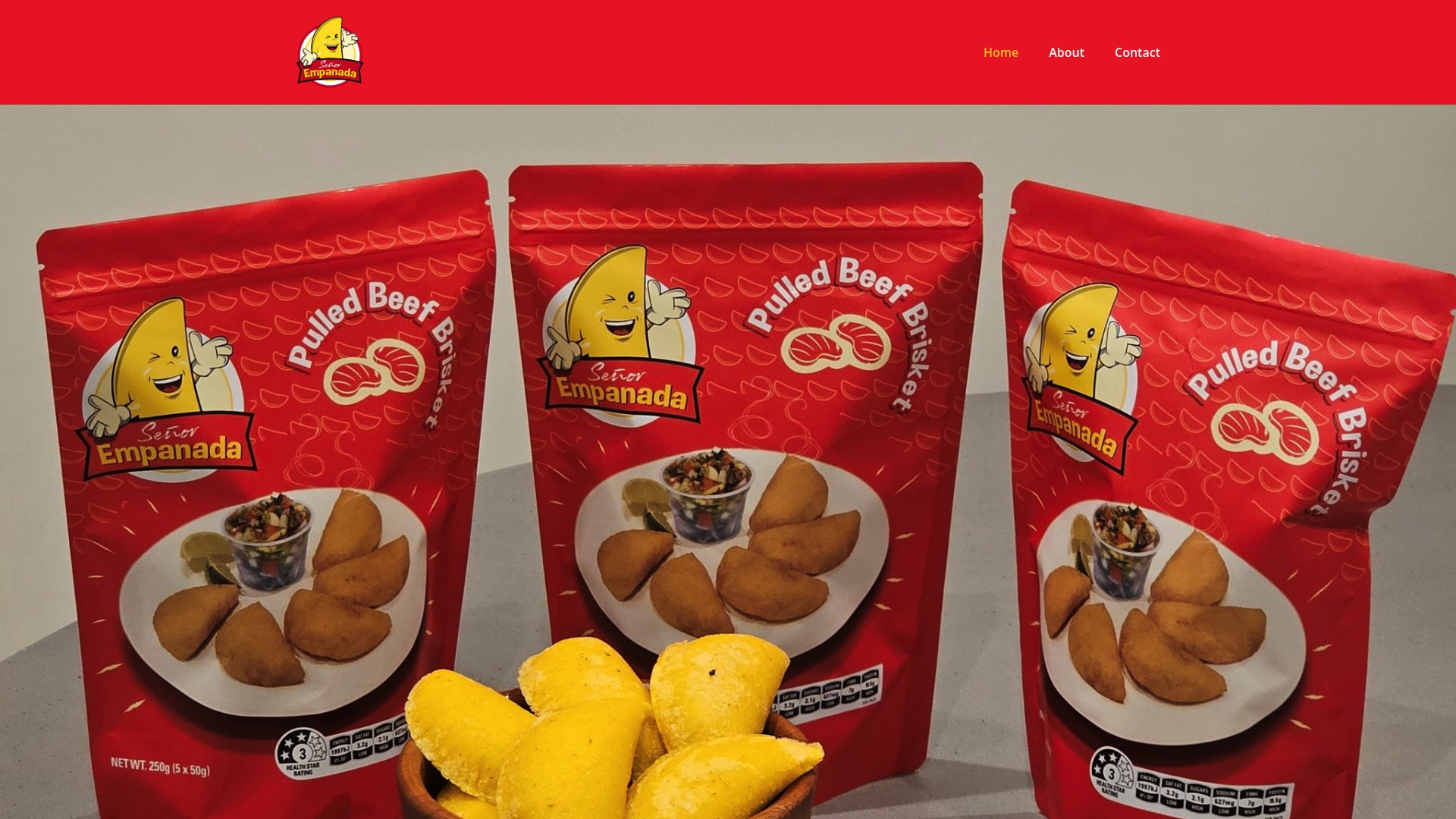
We work with cafés on manageable minimum order quantities and can talk through delivery scheduling once your volume settles into a rhythm. Event planners and retailers building out a kids’ menu or a party platter can start with our kids party snacks range, while cafés ready to add Latin flavour to the cabinet should head to our wholesale ordering page to request a sample box or a formal quote. Try one flavour, see how your customers respond, then scale from there.
Sources
- Food Standards Australia New Zealand — Standard 3.2.2A food safety management tools
- NSW Food Authority — Cafes, restaurants and retail outlets
- Foodistribute — Restaurant food suppliers for cafes, restaurants & caterers (Australia)
- Wholesale Directory — Wholesale food suppliers Australia: complete sourcing guide (2026)
FAQ
What are the best snacks to sell in cafes right now?
Empanadas and arepas lead the category because they’re handheld, reheat well, and cover both meat-eating and gluten-free customers without separate menu development.
Do cafés need a Food Safety Supervisor to sell empanadas?
Most cafés handling unpackaged, ready-to-eat food under Standard 3.2.2A need a certified Food Safety Supervisor, though the exact requirement depends on your state and council.
What markup should I put on wholesale Latin snacks?
Specialty imported or authentic lines typically support a 2 to 3 times markup, higher than the 100 to 150% markup common on standard bakery items.
How do I find a wholesale empanada supplier in Australia?
Senor Empanada supplies wholesale empanadas, arepas and sauces direct to cafés and retailers, with sample options available through the where to buy page.
How long can reheated empanadas sit in a display cabinet?
Hold times depend on your supplier’s guidance and your Food Safety Supervisor’s protocol, but most cafés reheat in small batches and hold for no more than a couple of hours before quality and safety both decline.