
For a standing reception, serve a mix of cold bites, hot bites, vegetarian options and one roaming substantial item such as empanadas, and plan on several pieces per guest as your starting point. Crowd-pleasers worth leading with are mini quiches, arancini balls, empanadas, stuffed mushrooms, smoked salmon blinis and vegetable skewers. These cover temperature, dietary need and ease of eating while mingling, which is the whole game at a standing event.
TL;DR:
- Hot items like empanadas and arancini should be frozen ahead of time and reheated on the day to maintain quality and safety.
- Cold options such as smoked salmon blinis, caprese skewers, and deviled eggs can be prepared a day in advance and served without last-minute cooking.
- Service should shift from tray-passed to self-serve stations after 30 to 45 minutes to prevent crowding and encourage mingling.
- The typical provision is 6 to 8 pieces per guest for a two- to three-hour event, increasing to 10 to 12 for longer or alcohol-heavy receptions, with a 10-15% buffer for extended durations.
- Food safety guidelines require monitoring time and temperature to keep hazardous foods out of the danger zone, with a maximum of 4 hours total display time.
Table of Contents
- A shortlist of crowd pleasers you can order or make
- Recipe ideas across cold, hot, vegetarian and seafood categories
- Make-ahead steps and fast finishing on the day
- How many pieces per guest, and what changes that number
- Setting up service so guests can eat while mingling
- Keeping displayed food safe under the 2-hour/4-hour rule
- What we have learned catering standing receptions
- Ordering empanadas and arepas for your event
- FAQ
- Sources
A shortlist of crowd pleasers you can order or make
When you are short on time, these twelve items give you a complete menu without reinventing anything. We have grouped them by how they are served, because service style changes how much prep and staffing you need on the day.
Passed on trays, these keep guests moving and talking rather than queuing:
- Empanadas (contains gluten, DF option available, make-ahead): a roaming, handheld favourite that needs no plate or cutlery and reheats quickly from frozen.
- Mini quiches (V, make-ahead): classic, freezer-friendly, and gentle on unfamiliar palates.
- Smoked salmon blinis (GF option, best finished on the day): elegant and fast to assemble if you pre-make the blinis.
- Vegetable skewers (VG, GF, DF, make-ahead): colourful, naturally dietary-friendly and easy to eat in two bites.
- Chicken satay skewers (GF, DF, make-ahead marinade): a reliable hot option that travels well once skewered.
- Arancini balls (V, make-ahead, freezes well): crisp outside, warm centre, and satisfying enough to double as the “I missed lunch” item.
Stationed on platters or boards, these let guests self-serve at their own pace:
- Stuffed mushrooms (V, GF, make-ahead): earthy, filling, and good for a warm station near the bar.
- Cheese and charcuterie bites on sticks (GF available, no cooking required): zero cook time and genuinely crowd-safe for picky eaters.
- Vegan protein energy balls (VG, DF, GF, make-ahead): a dense, no-cutlery option that covers the health-conscious guest list, with practical variations for vegan bites worth borrowing if you want more texture options.
- Rice paper rolls (VG, GF, DF, best assembled same-day): fresh and light against heavier fried items.
Roaming or anchor items, these give the event one substantial, memorable moment:
- Mini sliders (DF option, assemble on-site): a hearty bite that stops guests leaving hungry if a passed round is missed.
- Arepas with fillings (GF, V option, make-ahead batter): a corn-based alternative to bread-based bites, good for guests avoiding wheat.
A list like this works because it answers two questions at once: what do I serve, and how do I serve it. Service style is covered in more depth further down.
Recipe ideas across cold, hot, vegetarian and seafood categories
A standing reception menu needs variety, with options sorted by category and consideration for ease of eating while mingling.

Cold bites travel well and need no last-minute cooking, which makes them the easiest category to prepare a day ahead. Smoked salmon and cream cheese blinis hold their shape on a platter and are easy to pass. Prosciutto-wrapped melon skewers need almost no equipment and taste the best cold from the fridge. Caprese skewers (cherry tomato, bocconcini, basil) are naturally gluten-free and vegetarian. Deviled eggs are inexpensive and always disappear first, though they are best finished within a few hours of display. Rare roast beef crostini work for a more formal reception and pair well with a horseradish cream. Cucumber cups filled with whipped feta are light, dairy-based and easy to batch.
Hot bites add warmth and variety but need either an oven on-site or a strong reheating plan, covered in the next section. Arancini balls are a stationed favourite that fry up crisp and hold heat reasonably well. Mini quiches handle a second warm-through without drying out. Empanadas are built for exactly this job: pastry seals in the filling, so they travel, reheat and hold without going soggy. Chicken satay skewers are quick on a hot plate and forgiving if service runs late. Pork or beef sliders work as a roaming item when guests want something more substantial than a canapé.
Vegetarian and vegan options should never be an afterthought tacked onto the end of a menu. Stuffed mushrooms with herded breadcrumb are vegetarian by default and easy to make vegan by swapping butter for oil. Vegetable skewers with a chimichurri dip are naturally vegan and gluten-free. Rice paper rolls with peanut sauce are light, fresh and clearly labelled as a plant-based choice. Falafel bites with a tahini drizzle hold up at room temperature better than most fried items. Energy balls built from nuts, dates and cacao serve the same role at a drinks reception that a dessert table would at a sit-down dinner.
Gluten-free options deserve their own mention, since many classic finger foods rely on pastry or bread. Arepas, made from corn, are naturally gluten-free and substantial enough to anchor a station. Stuffed mushrooms, vegetable skewers and caprese skewers are all gluten-free without modification. Rice paper rolls use rice paper rather than wheat wrappers, so they are safe for coeliac guests as long as the dipping sauce is checked.
Seafood bites add a point of difference but need tighter time controls. Smoked salmon blinis are the easiest entry point. Prawn skewers with a lime and chilli glaze are quick to cook and eat in one bite. Seared tuna on wonton crisps look impressive on a dessert-style station but should be assembled close to serving time rather than held for hours.
Make-ahead steps and fast finishing on the day
Most of the work for a standing reception should happen the day before, not during the event. Sorting items into “fully make-ahead” and “finish on-site” early in your planning saves the host from a stressful final hour.
- Freeze what freezes well, such as empanadas, arancini and mini quiches, up to a few weeks ahead and reheat from frozen on the day.
- Refrigerate what needs freshness, such as blinis, rice paper rolls and anything topped with cream or avocado, no more than 24 hours ahead.
- Reheat in a fan-forced oven at around 180°C, checking hot items reach a safe serving temperature before they go out, then hold in a low oven or insulated box until service.
- Assemble cold items last, within an hour or two of guests arriving, so garnishes stay crisp and sauces have not gone soggy.
- Pack transport boxes by temperature, keeping hot and cold items separate and labelled, with a simple checklist taped inside the lid so nothing gets left on the kitchen bench.
Pro Tip: Keep one tray of each hot item in the oven on a low setting rather than trying to reheat everything at once, so you are never caught refilling an empty platter during a rush.
How many pieces per guest, and what changes that number
The standard planning rule is 6 to 8 pieces per guest for a standard two to three hour standing reception, rising to 10 to 12 pieces for a full evening event or one where alcohol is flowing freely. Event planning guidance on canapé quantities treats this as the baseline figure to adjust from, not a fixed target.
A few factors push that number higher. Alcohol increases appetite and slows service, so a drinks-only event running past two hours should budget towards the top of the range. Events without a seated meal to follow need the top end too, since finger food is effectively dinner. A mixed crowd of light and heavy eaters averages out, but it pays to always over-order slightly rather than run short.
- Build in a 10 to 15% buffer for any event longer than three hours.
- Add one extra hearty item, such as sliders or empanadas, whenever a passed-only service risks uneven distribution.
- Increase hot item counts specifically, since they tend to disappear faster than cold platters.
| Guest count | Standard reception (6 to 8 pieces) | Full evening or alcohol-heavy (10 to 12 pieces) |
|---|---|---|
| 30 guests | 180 pieces | 300 pieces |
| — | 300 pieces | 500 pieces |
| — | 600 pieces | 1,000 pieces |
These are starting figures to divide across your chosen categories, not a fixed menu in themselves. A five-category framework for standing menus is a useful way to split the total once you know roughly how many pieces you need.
Setting up service so guests can eat while mingling
The way food is presented decides whether guests circulate freely or cluster around one table. Passed service, where waitstaff carry trays through the room, keeps the space open and introduces food naturally into conversation. Stationed service, where platters sit on tables or a bar, lets guests self-pace and works well for larger groups where staffing passed trays for the whole event is not practical.
- Use passed service for the first 30 to 45 minutes to draw guests into the room, then shift to stationed platters as numbers settle.
- Refill platters in small batches rather than one giant top-up, so food is never sitting out for the full duration of the event.
- Label every dish clearly, including common allergens such as nuts, gluten and dairy, so guests with dietary needs do not have to ask.
- Place napkins, small plates and a discreet waste bin near every station, not just at the entrance.
- Choose cocktail forks or toothpicks over full cutlery wherever possible, since guests are usually holding a drink in the other hand.
A quick scan of the six finger-food categories that balance a cocktail menu is worth doing before finalising station placement, since variety matters as much as quantity.
Pro Tip: Put the vegetarian and gluten-free station closest to the entrance, so guests with dietary needs see their options immediately rather than hunting for them later.
Keeping displayed food safe under the 2-hour/4-hour rule

Ready-to-eat finger food sitting on a platter is exactly the kind of food safety guidance is written for. The FSANZ 2-hour/4-hour guide sets out that potentially hazardous food held between 5°C and 60°C can be used safely if the total time in that zone is under 2 hours, can still be used but not re-chilled if it is between 2 and 4 hours, and must be thrown out once it passes 4 hours. That clock is cumulative: it counts preparation, transport and display time together, not just how long a platter has been sitting on the table.
The 2-hour/4-hour rule is the single most useful safety check for a standing reception, because it turns a vague worry about “how long can this sit out” into a clear, countable limit, according to FSANZ’s own guide.
- Time-stamp every platter the moment it leaves the fridge, using a small sticker or a colour-coded plate so anyone in the kitchen can check at a glance.
- Check temperature with a thermometer accurate to ±1°C, as recommended in FSANZ’s temperature-control guidance, rather than guessing by touch.
- Refill in small batches straight from the fridge or oven, so the platter on display is never the oldest batch sitting out.
- Discard anything past the 4-hour mark, no matter how good it still looks, since the clock runs on cumulative time, not appearance.
Avoid ambient outdoor display altogether on hot days or for events running longer than 4 hours. In those cases, keep food in a fridge or warmer and bring out small amounts at a time rather than setting the whole spread out at once.
What we have learned catering standing receptions
Empanadas earn their place on a standing reception menu because the pastry does the hard work: it holds the filling, the heat and the shape through transport, reheating and an hour on a platter, which is more than most hot canapés can manage. We built our ordering and portioning guidance around exactly this kind of event, where food has to survive handling by a guest who is also holding a drink and a conversation.
— Senor Empanada
Ordering empanadas and arepas for your event
If you would rather skip the forecasting and just order a reliable roaming item, suppliers make that straightforward. Empanadas and arepas are made from traditional recipes and premium ingredients, built specifically to survive the handling a standing reception demands: no plate, no cutlery, no mess down a sleeve.
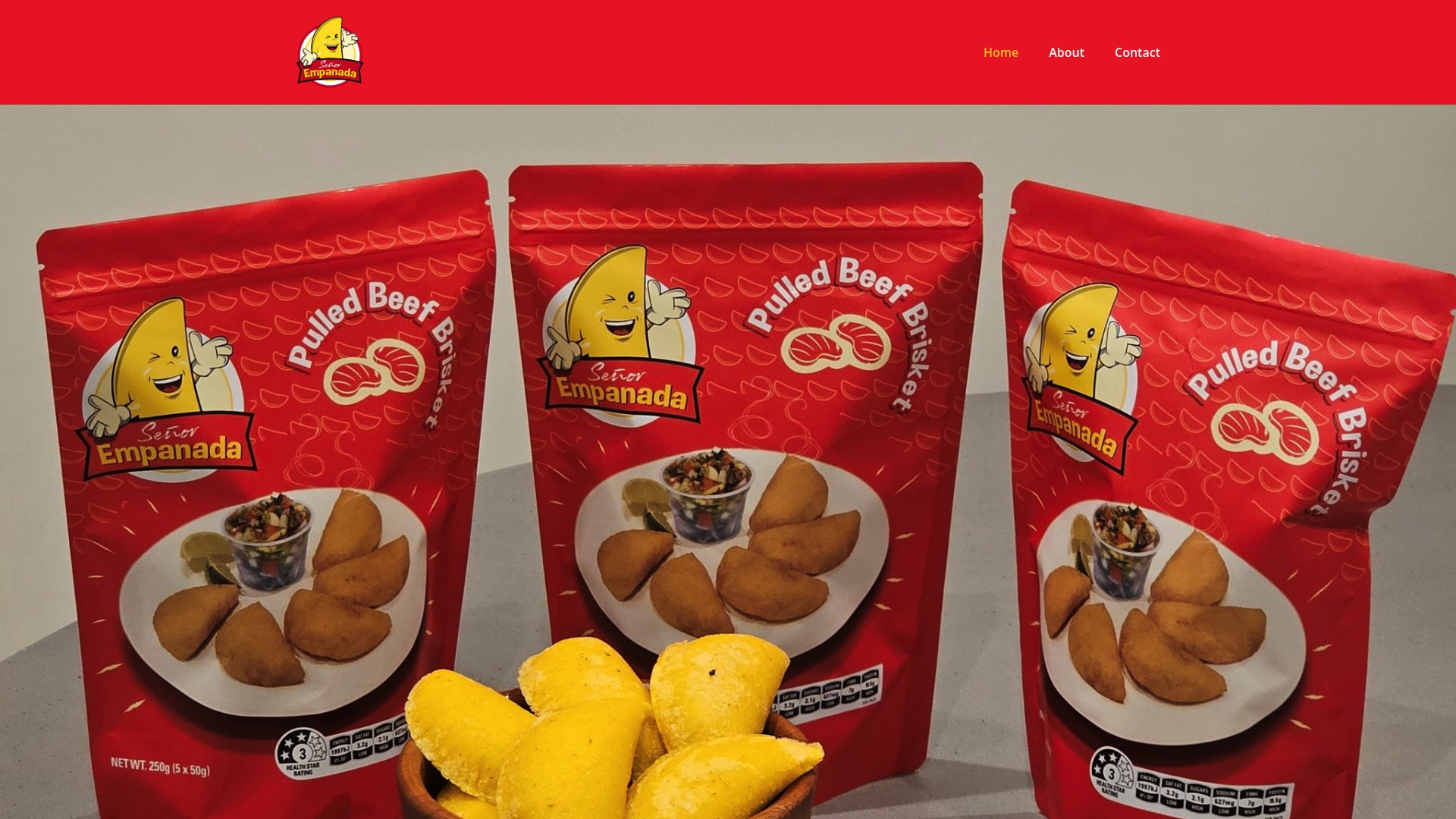
Orders can be placed for direct delivery or catering, with reheating guidance included so hot items come out of your oven ready to serve rather than guesswork. For hosts building a broader spread, our guide to matching sauces to empanada fillings and our rundown of sides that pair well with empanadas round out the table. Browse the full range and place an order through our empanadas and sauces page.
FAQ
What are some good finger foods for a wedding reception?
A wedding reception menu usually mixes elegant cold bites such as smoked salmon blinis and caprese skewers with warm, filling options like mini quiches, arancini and empanadas. Including at least one vegetarian, one gluten-free and one roaming substantial item keeps most guests covered without a separate dietary menu.
What are the top finger foods hosts choose most often?
Mini quiches, arancini balls, empanadas, stuffed mushrooms, smoked salmon blinis and vegetable or chicken satay skewers are among the most commonly chosen finger foods for standing events. They cover a spread of temperatures, textures and dietary needs while staying easy to eat one-handed.
What are some good cold finger foods?
Smoked salmon blinis, caprese skewers, prosciutto-wrapped melon, deviled eggs and cucumber cups with whipped feta are reliable cold options. They need no last-minute cooking, which makes them easy to prepare well ahead of an event.
What is the cheapest food to serve at a wedding reception?
Vegetable skewers, rice paper rolls and cheese or charcuterie bites on sticks tend to be the most budget-friendly options, since they rely on inexpensive, widely available ingredients and need little specialised equipment. Buying or making in bulk and leaning on vegetarian items generally keeps per-guest cost lower than seafood or premium meat bites.
How many pieces of finger food should I order per guest?
A starting point is 6 to 8 pieces per guest for a standard two to three hour standing reception, rising to 10 to 12 pieces for a full evening or an alcohol-heavy event.