
A great empanada pastry needs just five pantry staples: plain flour, cold butter, fine salt, one egg, and ice water. Combine them, rest the dough to relax the gluten, roll to an appropriate thinness, fill, seal, and cook. That is the whole method, and it works beautifully every time.
- Thickness: roll each disc to 2–3 mm for the ideal balance of delicacy and strength.
- Baking: 200°C for 18–22 minutes until golden.
- Frying: 175°C oil for 3–4 minutes, turning once.
Table of Contents
- What goes into an easy empanada pastry?
- How to make the dough step by step
- How to roll, fill, and seal your empanadas
- Bake or fry: which method suits your kitchen?
- Troubleshooting common pastry problems
- Adapting the recipe: variations and Australian swaps
- How to store, freeze, and reheat empanadas
- Why this simple pastry actually works
- Key takeaways
- Our take on keeping it simple
- Short on time? Senor Empanada has you covered
- FAQ
What goes into an easy empanada pastry?
A 5-ingredient empanada dough is genuinely reliable for home cooks, and most of what you need is already in your pantry.
Core ingredients (makes approximately 16 medium empanadas):
- 4 cups (600 g) plain flour
- ½ cup (115 g) cold unsalted butter, cubed (or lard/grasa vacuna for a more traditional result)
- 1 teaspoon fine salt
- 4 egg yolks
- 1 cup (250 ml) ice water
Optional additions:
- 1 teaspoon white vinegar for extra tenderness
- A splash of cold milk in place of some water for a richer crumb
- 1 egg beaten with a tablespoon of water for egg wash (baking only)
Notes for Australian shoppers: Use plain flour, not self-raising — the leavening in self-raising flour will puff the pastry unevenly. All-purpose flour with 10–12% protein hits the sweet spot; most supermarket plain flour brands in Australia fall comfortably in that range. For butter, standard unsalted butter (around 80% fat) from Woolworths or Coles works perfectly. Lard and rendered beef fat (grasa vacuna) are available from some butchers and Latin grocery stores in Sydney and Melbourne if you want a more authentic Argentine flavour.
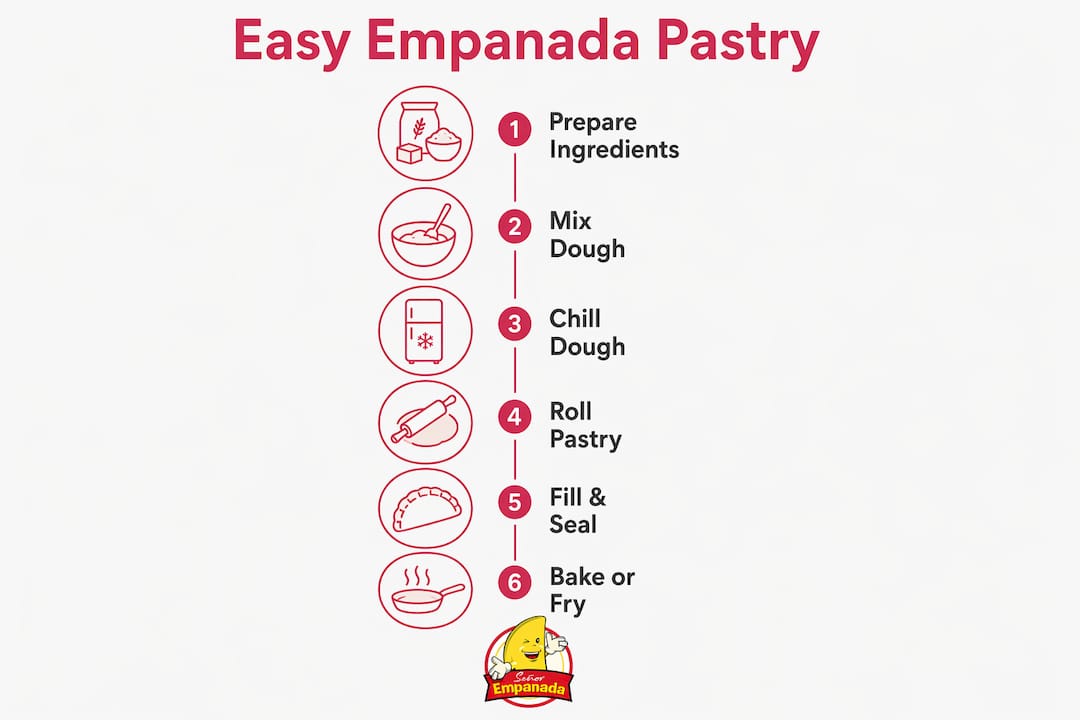
How to make the dough step by step
The method is straightforward: mix the dry ingredients, cut in the fat, add liquid, bring the dough together, and rest it. Minimal handling is the key to a tender crust.
- Measure and combine dry ingredients. Whisk the flour and salt together in a large bowl until evenly distributed.
- Cut in the fat. Add the cold cubed butter and rub it into the flour with your fingertips until the mixture resembles coarse breadcrumbs. Work quickly so the butter stays cold.
- Add the wet ingredients. Make a well in the centre, add the egg yolks, then pour in the ice water gradually, mixing with a fork as you go.
- Bring the dough together. Use your hands to press the mixture into a shaggy mass, then turn it out onto a lightly floured surface. Knead briefly, just until the dough is smooth and cohesive. Stop the moment it comes together.
- Form and wrap. Shape into a flat disc, wrap tightly in cling film, and refrigerate.
- Rest. Chill for at least 30 minutes, or up to an hour. Resting relaxes the gluten, which prevents the dough from shrinking and cracking when you roll and fill it.
Pro Tip: Keep everything cold. If your kitchen is warm and the dough starts to feel greasy or slack during kneading, pop it back in the fridge for 10 minutes before continuing. Cold fat creates the steam pockets that give you a flaky, light pastry rather than a dense, oily one.
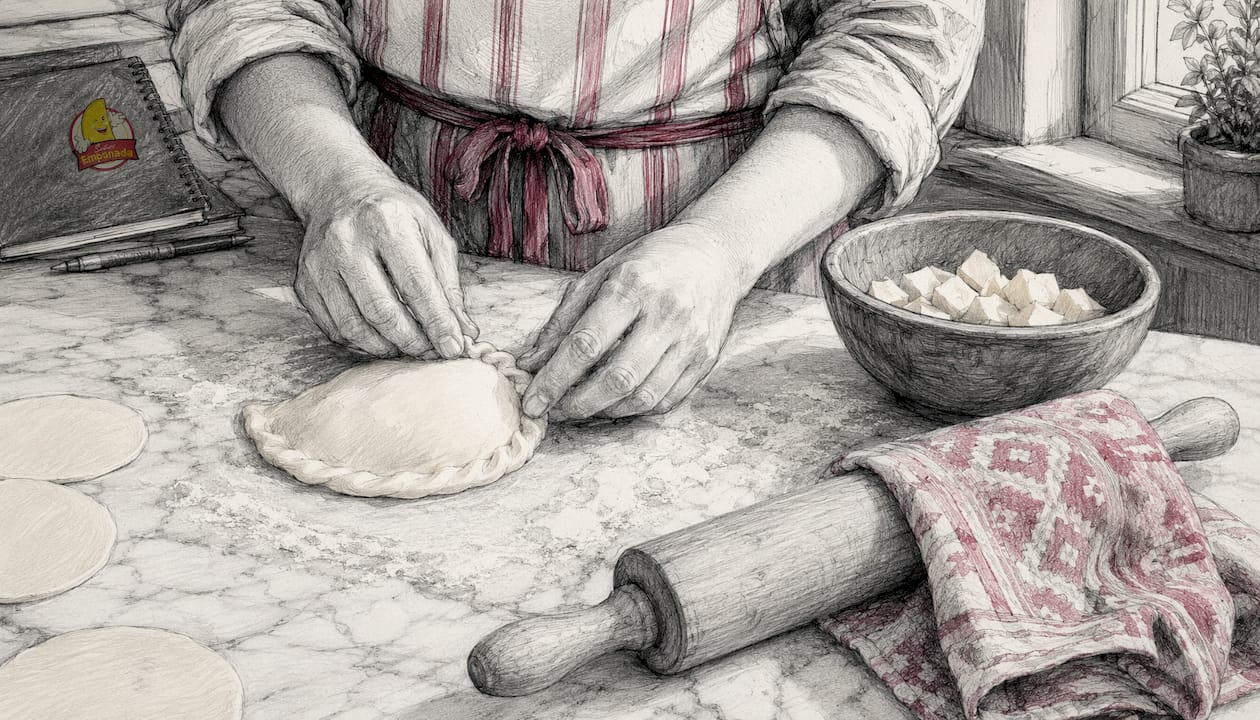
How to roll, fill, and seal your empanadas
Once the dough has rested, divide it into equal portions and roll each into a ball. On a lightly floured surface, use a rolling pin to flatten each ball into a round disc about the size of a small plate, aiming for a thin and even thickness throughout.
Assembly at a glance:
- Place 1–2 tablespoons of cooled filling in the centre of each disc, leaving a clean 1.5 cm border around the edge.
- Lightly moisten the border with water or egg wash using your fingertip.
- Fold the dough over into a half-moon shape and press the edges firmly together.
- Fork crimp: press the tines of a fork along the sealed edge for a quick, reliable finish.
- Simple pleat: fold small overlapping pleats along the edge for a more traditional look; this takes a little practice but holds exceptionally well.
Pro Tip: Always use cooled fillings and add a binder like grated cheese or a beaten egg to absorb excess moisture. A hot or wet filling will steam the pastry from the inside, softening the base before it even reaches the oven.
A good visual cue for thickness: the disc should be thin enough to show a faint shadow of your hand held behind it, but not so thin you can see fingerprints through it.
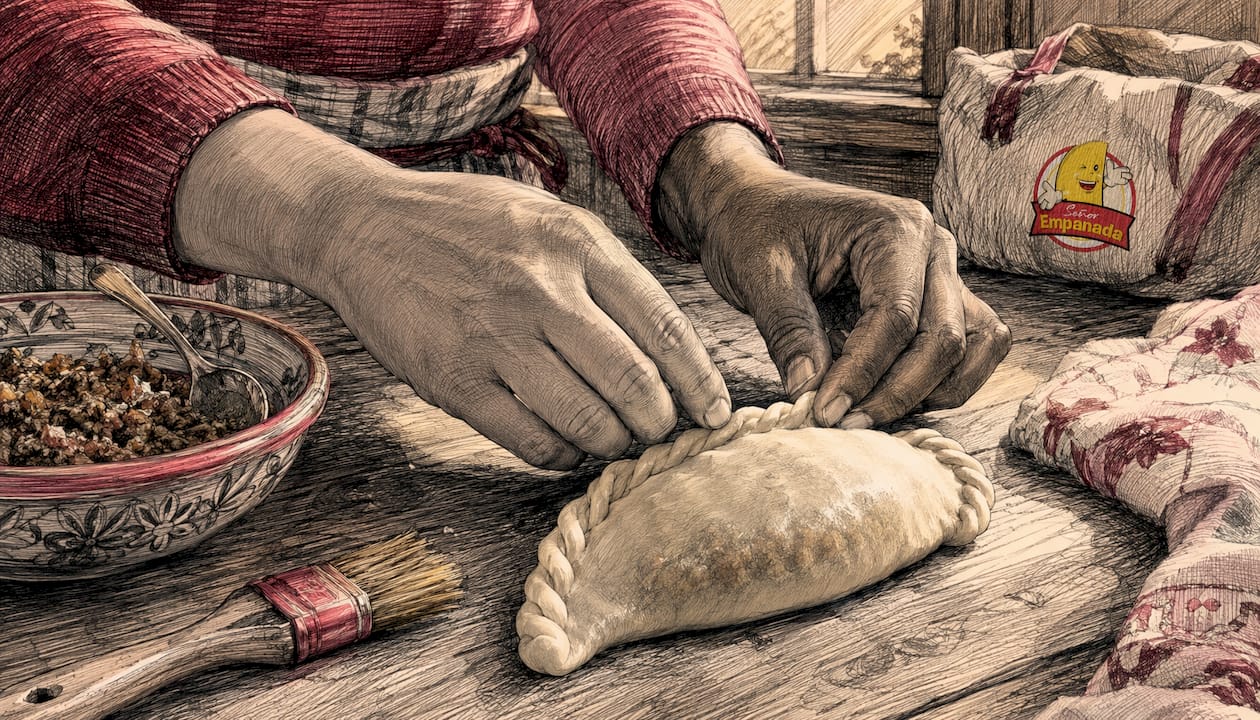
Bake or fry: which method suits your kitchen?
Both methods produce delicious results. The choice comes down to your preference for texture and how much oil you want to use.
| Method | Temperature | Time | Result |
|---|---|---|---|
| Baking | Moderate oven temperature | Until golden and cooked through | Golden, lighter, less oil |
| Frying | Hot oil | Until crisp and golden | Crisp, rich exterior |
Baked empanadas benefit from an egg wash brushed over the tops before they go into the oven; this gives them that deep golden colour and a slight sheen. Place them on a lined baking tray in the middle rack for even browning.
For frying, maintain a steady oil temperature throughout. If the oil drops too low, the pastry absorbs excess fat and turns greasy rather than crisp. Fry in small batches and drain on a wire rack rather than paper towels — airflow keeps the exterior crunchy.
Safety note: never leave hot oil unattended, and lower empanadas gently into the oil away from you to avoid splashing.
Troubleshooting common pastry problems
Even a forgiving dough can go sideways. Here are the most common issues and their fixes:
- Tough, dense dough: you overworked it. Next time, stop kneading the moment the dough is smooth. If it is already mixed, rest it longer — at least an hour — to let the gluten relax before rolling.
- Dough cracks when rolling: it is too cold or too dry. Let it sit at room temperature for 5 minutes, then add a few drops of ice water and fold gently.
- Soggy pastry base: the filling was too wet or too warm. Drain excess liquid, thicken with cheese or egg, and always cool fillings completely before assembly.
- Seals bursting open during cooking: the edges were not pressed firmly enough, or the filling was overfilled. Use one tablespoon less filling than you think you need, moisten the border well, and press with intention.
- Greasy fried empanadas: the oil was not hot enough. Use a thermometer and fry in small batches so the temperature stays consistent.
Pro Tip: Moisture management is the most common cause of pastry failure. Drain, thicken, and cool your filling before it ever touches the dough, and you will avoid most of these problems in one step.
Adapting the recipe: variations and Australian swaps
The base recipe is flexible enough to accommodate different fats, flours, and dietary needs.
| Dough style | Fat used | Best cooking method | Texture |
|---|---|---|---|
| Argentine traditional | Grasa vacuna (beef fat) | Baking or frying | Rich, slightly crumbly |
| Butter-based (home cook) | Unsalted butter | Baking or frying | Tender, flaky |
| Oil-based | Neutral vegetable oil | Frying | Softer, less flaky |
| Dairy-free | Coconut oil or vegan butter | Baking | Mild flavour, pliable |
Traditional Argentine recipes favour rendered beef fat for an authentic depth of flavour, but butter is an excellent substitute for everyday home cooking. Avoid bread flour — its higher protein content produces a chewier, tougher pastry. For a gluten-free version, see our complete gluten-free empanada dough guide for tested flour blends and ratio adjustments.
For fillings, a classic spiced beef picadillo pairs beautifully with a butter-based crust, while cheese and corn work well with an oil-based dough. Sweet fillings like guava and cream cheese or apple and cinnamon suit the butter version perfectly. Browse our 10 authentic Latin American empanada recipes for pairing inspiration.
How to store, freeze, and reheat empanadas
Batch cooking empanadas is one of the great pleasures of this recipe.
- Dough in the fridge: wrap tightly in cling film and refrigerate for up to 2 days.
- Dough in the freezer: freeze for up to 3 months. Stack rolled discs between sheets of baking paper, wrap the whole stack in cling film, and seal in a zip-lock bag.
- Assembled, unbaked empanadas: arrange on a lined tray and flash-freeze for 1 hour until firm, then transfer to a freezer bag. They keep for up to 3 months.
- Baking from frozen: add 5–8 extra minutes to the standard baking time; no need to thaw first.
- Reheating baked empanadas: a 180°C oven for 8–10 minutes restores crispness far better than a microwave, which softens the pastry.
Avoid freezing empanadas with very wet fillings like spinach and ricotta without draining them thoroughly first — excess moisture turns the pastry soggy during thawing.
Why this simple pastry actually works
The five-ingredient formula succeeds because it balances three variables: fat, gluten, and moisture. Cold butter coats the flour particles before water is added, limiting gluten development and creating a pastry that is tender rather than chewy. When the butter hits oven heat or hot oil, it releases steam, which lifts the layers and produces that characteristic flakiness.
Rolling to 2–3 mm and resting the dough for 30–60 minutes are not optional steps — they are the two actions that most directly determine whether your empanadas hold together or fall apart. Thickness controls structural integrity; rest time controls elasticity.
Australian kitchens add one extra consideration: humidity. On humid days, the dough absorbs moisture from the air more readily, so you may need slightly less water than the recipe states. Start with three-quarters of the ice water and add the rest only if the dough feels dry. In air-conditioned kitchens, the opposite applies.
Key takeaways
A reliable easy empanada pastry comes down to five ingredients, cold fat, a proper rest, and rolling to exactly 2–3 mm.
| Point | Details |
|---|---|
| Keep fat ice-cold | Cold butter creates steam pockets for flakiness; warm fat produces a greasy, dense result. |
| Minimal kneading | Stop the moment the dough is smooth — overworking builds tough gluten. |
| Roll to 2–3 mm | This thickness balances structural strength with a delicate, flaky bite. |
| Cool fillings before assembly | Hot or wet fillings steam the pastry from inside, causing soggy bases and burst seals. |
| Senor Empanada option | When time is short, Senor Empanada offers ready-made authentic empanadas for Australian customers. |
Our take on keeping it simple
There is a temptation, when making pastry for the first time, to overcomplicate things. We have seen home cooks add extra steps, extra ingredients, and extra anxiety to a process that genuinely rewards restraint. The truth is that empanada dough is engineered for durability and flavour, not for elaborate lamination. It is meant to be made in a home kitchen, by hand, with ingredients you already own.
What we find most satisfying about this approach is how it connects you to a culinary tradition that stretches across Latin America, from the smoky asado kitchens of Argentina to the coastal markets of Colombia. Every fold and crimp carries that history. The five-ingredient method is not a shortcut. It is the original.
Our one strong recommendation: trust the rest time. Thirty minutes in the fridge is the single step most home cooks skip, and it is the one that makes the biggest difference to how the dough handles and how the finished empanada holds together. Set a timer, make the filling while you wait, and come back to a dough that rolls like a dream.
Short on time? Senor Empanada has you covered
Not every week allows for an hour of pastry-making, and that is completely understandable. Senor Empanada crafts authentic Latin American empanadas using traditional recipes and premium ingredients, so you can enjoy the real thing without the prep time. Whether you are planning a gathering, stocking the freezer, or simply craving something genuinely flavourful on a Tuesday night, our ready-made empanadas deliver that same warmth and cultural richness you would get from making them yourself.
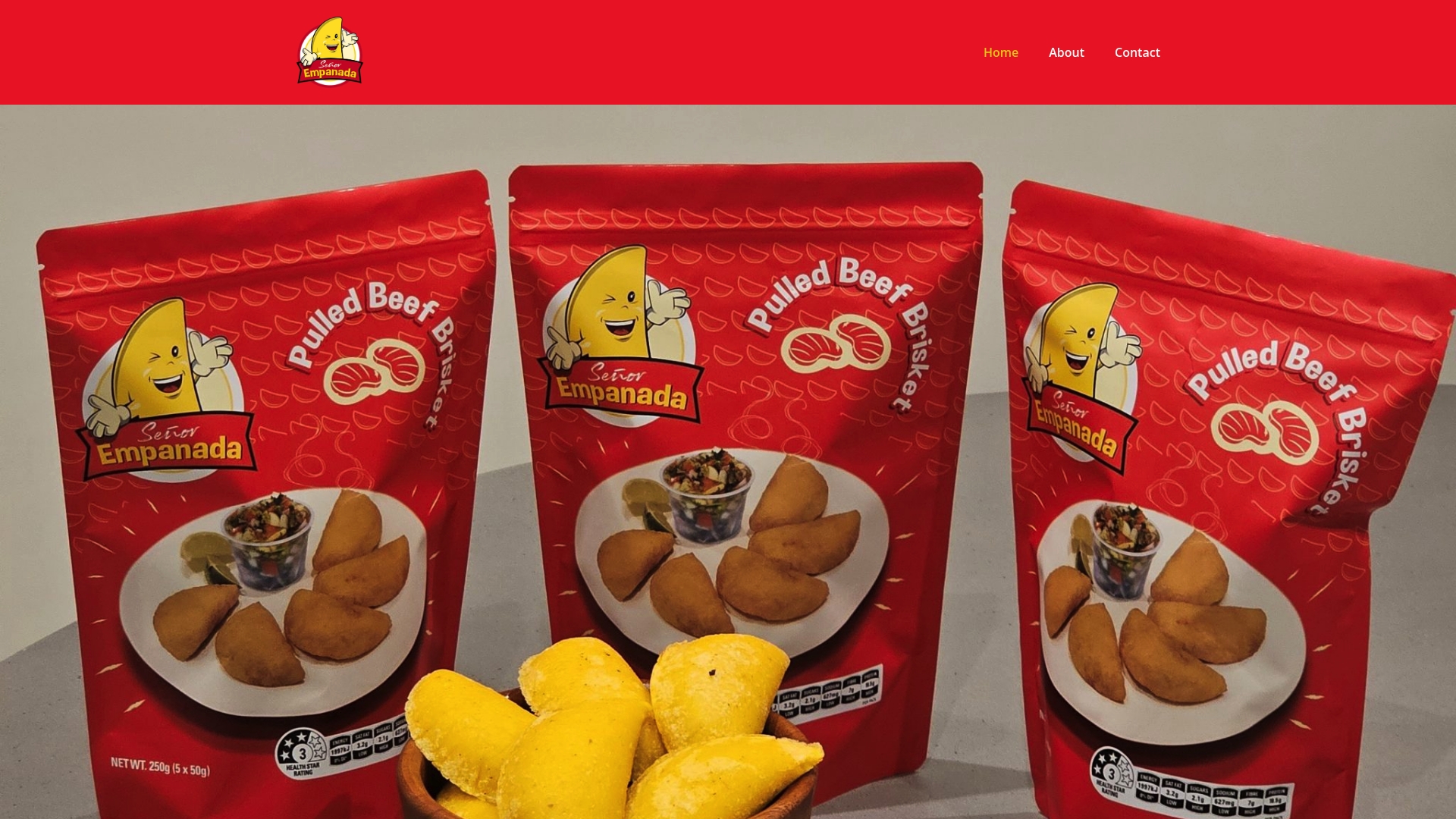
From the Traditional Beef Empanada to the Cheesy Empanada, every product is made with the same care and passion that goes into a home-cooked batch. We also offer catering for events and wholesale options for hospitality businesses across Australia. Browse our authentic empanada recipes and ready-made options and place your order directly through our website.
Useful sources
- Empanada dough recipe: authentic Argentine method — detailed technique notes on thickness, fat choice, and rest time for a traditional result.
- Easy Empanada Dough (Take Two Tapas) — a tested 5-ingredient recipe with clear home-cook guidance.
- How to make perfect empanadas (Empanada Mama) — practical advice on temperature control, filling moisture, and sealing technique.
- Empanada dough guide: ingredients, types and how to make it (Kimecopak) — useful breakdown of flour protein content and its effect on pastry texture.
- Easy empanada recipe with savoury beef filling (Once Upon a Chef) — reliable baking guidance including egg wash technique and oven positioning.
FAQ
How do you make easy dough for empanadas?
Combine plain flour and salt, rub in cold cubed butter until crumbly, then mix in egg yolks and ice water until a smooth dough forms. Rest in the fridge for at least 30 minutes before rolling to 2–3 mm thickness.
What kind of pastry is used for empanadas?
Empanadas use a short, unleavened pastry made from plain flour, fat, egg, and water. It is sturdier than puff pastry and more pliable than shortcrust, designed to fold and seal around a filling without cracking.
What other dough can you use for empanadas?
If you prefer not to make your own, store-bought shortcrust pastry or pie dough rounds work as a quick substitute. For a full breakdown of alternatives, see our guide on what to use instead of empanada dough.
What is the secret to a perfect empanada crust?
Two things: keep the fat cold throughout mixing, and rest the dough for at least 30 minutes before rolling. Cold fat creates flakiness; rest time relaxes the gluten so the dough rolls smoothly and holds its shape during cooking.