
Reheating catering at a venue is safe when you confirm the right equipment, agree on target core temperatures, and lock in a reheating timeline with your caterer before the event day. Three things to do right now: call the venue to confirm kitchen access and dedicated power circuits; ask your caterer to confirm they will probe and record core temperatures on arrival; and reserve hot-holding equipment (chafing dishes or a heated cabinet) for the full service window. The headline numbers to keep front of mind are a minimum reheating core temperature of 75°C (167°F) held for at least 30 seconds, and a hot-holding threshold of 63°C (145°F) or above throughout service. Cold items must stay below 5°C (41°F). Food safety guidance is clear: perishable food left at room temperature for more than two hours enters unsafe territory, and that clock starts the moment food leaves the kitchen.
Key takeaways
Safe on-site food service at a venue requires confirmed equipment, a named person monitoring temperatures, and a reheating plan that brings all food to a core of 75°C before it enters a chafing dish or hot-holding unit.
| Point | Details |
|---|---|
| Confirm equipment and power | Verify oven access, dedicated circuits and chafing dish supply at least 48 hours before the event. |
| Hit 75°C before hot holding | Reheat all food to a 75°C core before loading into chafers; chafers hold, they do not reheat. |
| Respect the 4-hour danger zone | Cumulative time between 5°C and 63°C must not exceed 4 hours, including transport and setup. |
| Keep a temperature log | Record probe readings, times and corrective actions at every stage from departure to pack-down. |
| Decide on leftovers at the event | Pack leftovers only when the cumulative danger-zone time is well under 4 hours and food is uncontaminated. |
Table of Contents
- What you need to confirm before reheating catering at a venue
- Temperature rules and time controls you need to know
- Which reheating method works best for each food type?
- How to plan transport, arrival checks and your reheating timeline
- How to hold and serve hot and cold buffet items safely
- When can you offer leftovers to guests?
- Top reheating mistakes event planners make and how to fix them
- Senor Empanada’s recommended method for reheating empanadas at a venue
- What on-site reheating really comes down to
- Sources
- FAQ
What you need to confirm before reheating catering at a venue
A quick pre-event confirmation call saves hours of stress on the day. Run through this checklist with both your venue coordinator and your caterer at least 48 hours out.
Equipment and power
- Oven or combi-oven access, including rack space for full trays
- Dedicated power circuits for electric chafers, heated cabinets or induction burners
- Chafing dishes with fuel canisters or electric chafers and a water pan for each
- At least one calibrated digital probe thermometer per food station
- A printed temperature log sheet and pen at each station
Staffing and responsibilities
- One named person responsible for all reheating and temperature checks
- A second person to record probe readings and note any corrective actions
- Clear handover notes if staff rotate during a long service
Permissions and venue constraints
- Kitchen access window (when you can enter and when you must be out)
- Any no-open-flame or no-cooking policies that affect fuel chafers
- Refrigeration access for cold items and waste disposal arrangements
Pro Tip: Assign one accountable person to own the temperature log from arrival to pack-down. A single sheet with time, food item, probe reading and initials is all you need, and it protects you if a food safety question arises later.
Temperature rules and time controls you need to know
Getting the numbers right is the foundation of safe on-site food service. Australian food safety practice, aligned with Food Standards Australia New Zealand (FSANZ) principles, sets clear thresholds.
| Stage | Target temperature | Notes |
|---|---|---|
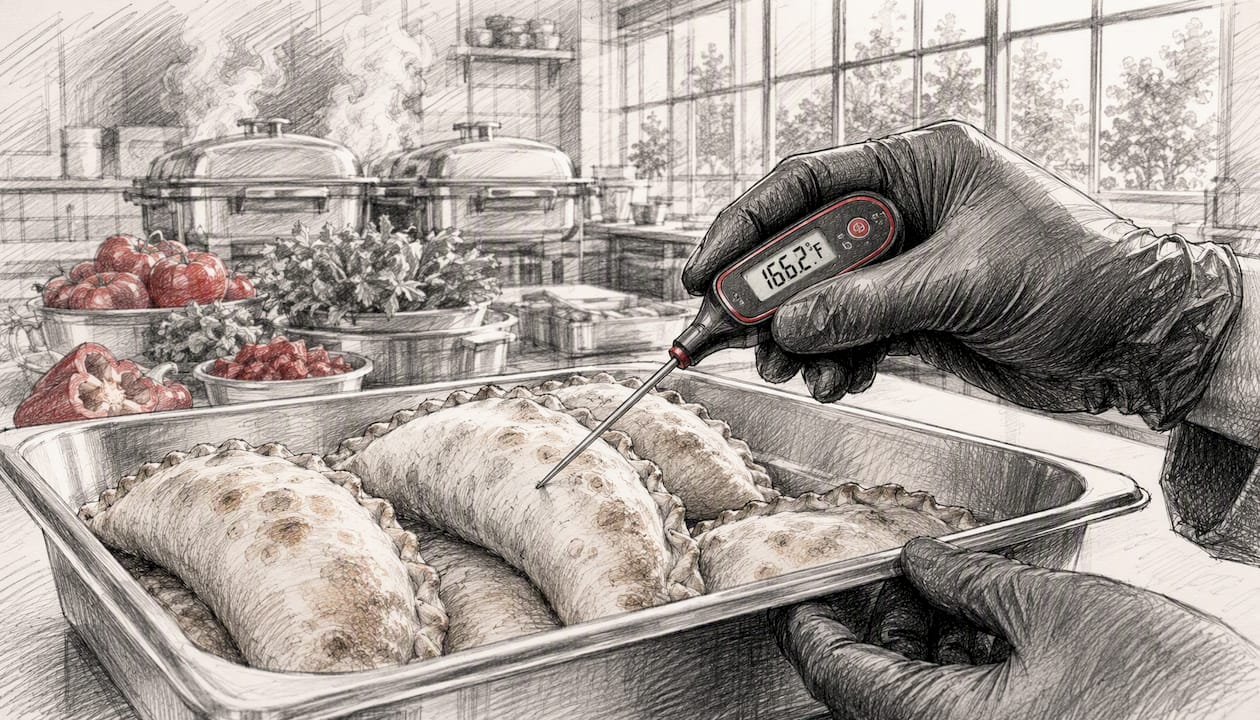
| Reheating (core) | 75°C (167°F) for 30 seconds | Probe the thickest part of the food |
| Hot holding | 63°C (145°F) or above | Check every 30–60 minutes |
| Cold holding | 5°C (41°F) or below | Use ice baths; replenish ice regularly |
| Danger zone | 5°C–63°C (41°F–145°F) | Limit cumulative time to 4 hours maximum |
The danger zone and the 4-hour rule. Temperature-controlled-for-safety (TCS) foods — anything moist, protein-rich or cooked — can spend a cumulative maximum of 4 hours in the danger zone before they must be discarded. That clock accumulates across transport, setup and service, not just service alone. If you are unsure how long food has been in the zone, discard it.
Defrosting before reheating. Fridge thawing overnight is the safest method. Rapid room-temperature thawing is only acceptable if you move the food directly into a preheated oven immediately after. Never leave frozen or partially thawed catering trays on a bench while you set up the rest of the venue.
Monitoring and records. Use a disinfected digital probe thermometer and take representative core-temperature readings from multiple points in a tray, not just the surface. Record each reading with the time and the food item. HACCP principles for catering treat reheating and hot holding as Critical Control Points, which means a missed temperature reading is not a paperwork issue — it is a food safety gap.
Which reheating method works best for each food type?
The right method depends on the food’s structure, moisture content and portion size. Here is how to match method to food at a venue.
Oven (fan-forced, 160°C–180°C)
Best for large trays, pastries and filled items. Cover trays loosely with foil to retain moisture, then remove the foil for the final five minutes to restore a crisp surface. Always probe the centre of the thickest piece before declaring the batch ready. Following your caterer’s specific heating instructions is the single most reliable guide for timing.
Microwave
Useful for portioned items when oven space is limited. Heat in short 60–90 second bursts, stir or rotate halfway, and check the core temperature before serving. Transfer to a warm oven or chafing dish immediately after to maintain temperature. Microwaves heat unevenly, so a probe check is non-negotiable.
Steam and bain-marie
Ideal for moist dishes, rice, sauces and soups. At a venue, a bain-marie setup uses a deep pan of simmering water with a perforated or solid insert above it. Keep the water at a gentle simmer, not a rolling boil, to avoid overcooking delicate items. This method holds moisture beautifully but will not crisp a pastry surface.
Chafing dishes and hot boxes
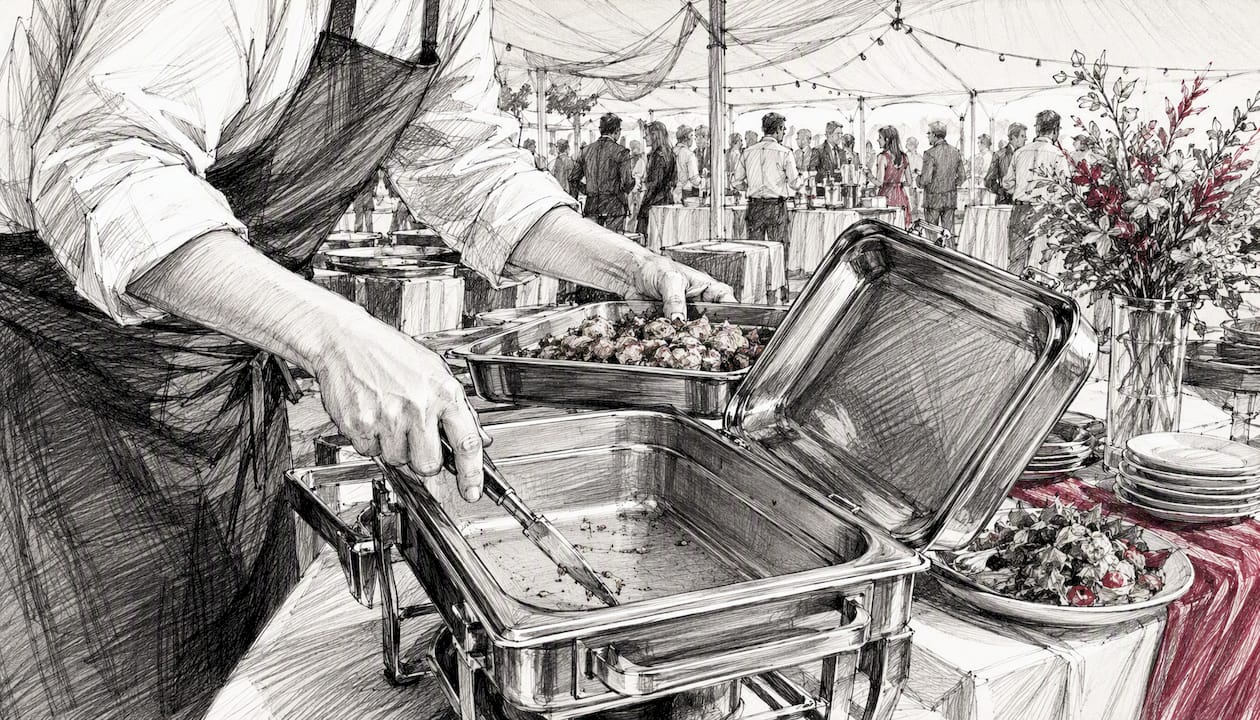
Chafing dishes are a hot-holding tool, not a reheating tool. Fuel-based chafers typically maintain around 60°C and will keep food warm for roughly 2–3 hours; electric chafers offer more precise control for longer service windows. Always load chafers with food that has already reached 75°C. Never use a chafing dish to bring cold food up to temperature.
Pastries and filled items (including empanadas)
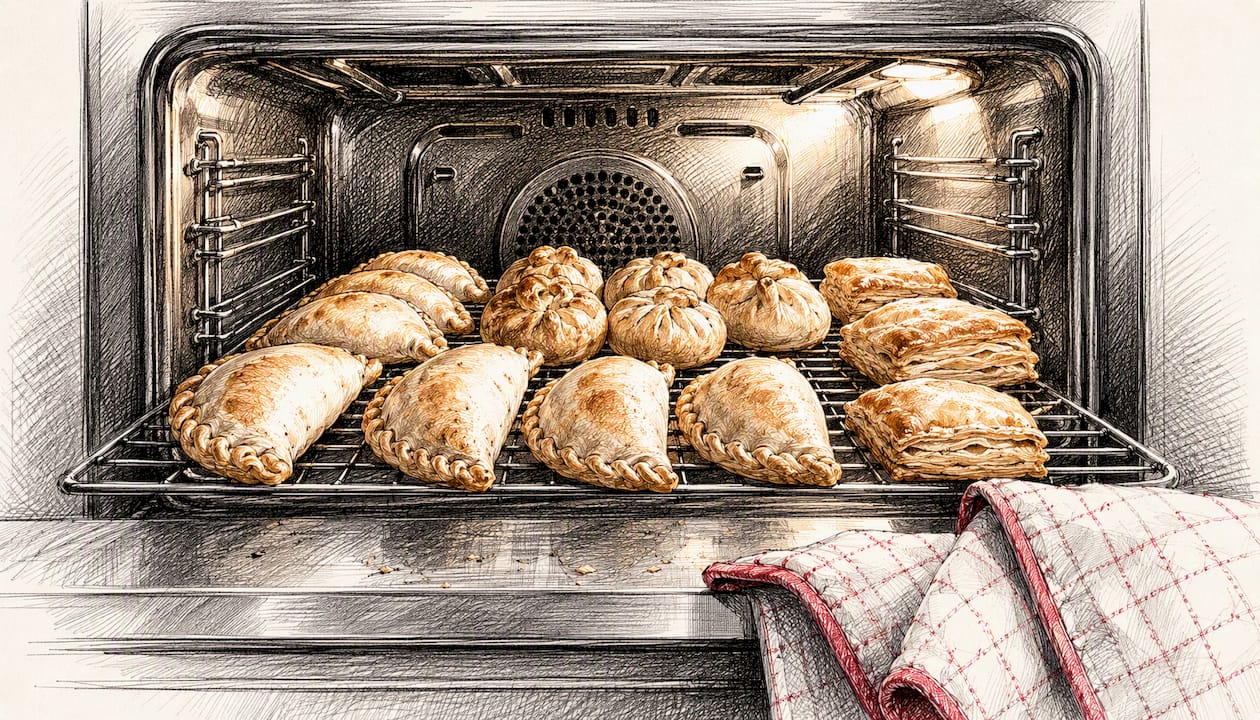
Avoid wrapping filled pastries tightly in foil and placing them directly over steam — the sealed environment turns the pastry soggy within minutes. Instead, warm on a ventilated rack in a moderate oven (170°C) for 8–12 minutes, then transfer to a chafer lined with a rack insert to keep the base off the water pan.
How to plan transport, arrival checks and your reheating timeline
Most food safety failures at events happen during setup, not service. Treating transport and arrival as Critical Control Points in your HACCP plan closes that gap.
Timeline template
- Departure (T-0): Record food temperatures in insulated containers. Hot food must leave at or above 63°C; cold food at or below 5°C.
- Arrival (T + travel time): Probe and record temperatures immediately on arrival. Hot food should remain at or above 57°C (135°F) during transport; if it has dropped below this, reheat immediately or discard.
- Reheating window (allow 20–40 minutes): Bring all items to a core of 75°C before loading into chafers or serving.
- Hot-hold start: Load chafers, confirm water pan temperature, record first holding temp.
- Service: Check and record temperatures every 30–60 minutes. Rotate small batches to keep food fresh.
- End of service: Record final temperatures and decide on leftovers within the 4-hour cumulative window.
Transport best practices
- Use insulated food-grade containers or thermal bags rated for hot or cold holding
- Separate hot and cold items in different containers
- Record departure temperature for every container on a transport log
- On arrival, probe before unloading and flag any item that has dropped into the danger zone
Contingency plan for equipment failure
If a chafer runs out of fuel or an oven trips a circuit, move affected food immediately to a working heat source. If no alternative is available and the food has been in the danger zone for a cumulative total approaching 4 hours, discard it. Never attempt to re-serve food whose temperature history is unknown. Keep a small cold-service backup menu (think room-temperature items or pre-chilled platters) as insurance for power-related failures.
How to hold and serve hot and cold buffet items safely
Safe service is an active process, not a set-and-forget arrangement.
Hot holding setup
- Fill the water pan of each chafing dish to the manufacturer’s recommended level (typically 2–3 cm) and bring it to temperature before loading food
- Use lids between service to retain heat and reduce contamination risk
- Keep food pans no deeper than 10 cm so heat distributes evenly to the centre
- Check and record temperatures every 30–60 minutes; if a tray drops below 63°C, remove it, reheat to 75°C and return it
Cold display
- Nest cold food pans in a bed of ice and replenish ice as it melts
- Serve in small batches and replenish from refrigerated stock rather than leaving a full tray out
- Cover cold displays between service rushes
Reducing cross-contamination
- Provide a dedicated serving utensil for each dish and replace it if it touches a guest’s plate
- Set up a separate allergen station with clearly labelled items and dedicated utensils
- Brief all service staff on the two-hour rule before the event starts
- Post a simple allergen and temperature reminder card at each station for self-service buffets
When can you offer leftovers to guests?
The decision to pack leftovers is a food safety call, not a hospitality one. If food has been in the danger zone for a cumulative total approaching or exceeding 4 hours, it must be discarded regardless of how it looks or smells.
When it is safe to pack leftovers
- Food has been held above 63°C or below 5°C for the entire service
- The cumulative time in the danger zone is well under 4 hours
- The food has not been contaminated by serving utensils touching guest plates
How to pack them safely
- Use shallow, food-grade containers so food cools quickly in the fridge
- Label each container with the food item, the date and time packed, and a simple reheating instruction (e.g., “Reheat to 75°C before eating”)
- Note any allergens on the label
- Refrigerate within the 2-hour window from when food was last at a safe temperature
Storage guidance. Refrigerated leftovers are generally safe for 3–4 days. If guests are unlikely to eat them within that window, freeze them on the day of packing. Advise guests to reheat to a core of 75°C before eating, not just until “hot.”
Top reheating mistakes event planners make and how to fix them
- Relying on chafing dishes to reheat cold food. Chafers maintain temperature; they do not reliably raise it. Always reheat to 75°C in an oven or on a stove before loading a chafer.
- Not confirming power and kitchen access in advance. Arriving at a venue to find the kitchen locked or the power circuit already at capacity is a genuine crisis. Confirm both in writing at least 48 hours before the event.
- Skipping the temperature log. A verbal “it felt hot” is not a food safety record. A simple written log with times and probe readings is your protection and your caterer’s.
- Overloading chafing dishes. Deep, overfull pans heat unevenly. Keep food pans shallow and rotate small batches from a warm oven or heated cabinet.
- Ignoring the cumulative danger-zone clock. Every minute food spends between 5°C and 63°C counts, including transport time. Start the clock at departure, not at service.
- No corrective action plan. If a probe reading comes in low, staff need to know exactly what to do: reheat immediately, or discard if the 4-hour window is close. Decide this before the event, not during it.
Senor Empanada’s recommended method for reheating empanadas at a venue
Empanadas are one of the most rewarding items to serve at an event, and they travel and reheat beautifully when handled with a little care. Here is the method we recommend for getting them to the table golden, crisp and full of flavour.
Preferred reheating method
- Preheat a fan-forced oven to 170°C–180°C
- Arrange empanadas on a ventilated wire rack over a baking tray (never flat on a solid tray, which traps steam under the base)
- Reheat for 8–12 minutes until the core reaches 75°C, probing the thickest filled point
- Transfer immediately to a chafer with a rack insert to keep the base elevated above the water pan
Packaging and transport notes
- Transport empanadas in ventilated trays or boxes, never sealed airtight, to prevent condensation softening the pastry
- Keep hot empanadas in insulated containers lined with a breathable paper layer, not plastic wrap
- On arrival, if empanadas have cooled below 63°C, go straight to the oven for a full reheat before service
Holding without sogginess
- Serve in small batches of 10–15 pieces and replenish from the oven every 15–20 minutes
- Avoid covering empanadas with lids during service; a loose foil tent is acceptable for very short holds
- For party finger food formats, plan your batch sizes around your guest count so nothing sits in a chafer for more than 30 minutes
Pro Tip: If you have oven access at the venue, hold empanadas at 80°C in the oven on a rack rather than in a chafing dish. The dry heat keeps the pastry crisp far longer than the humid environment of a water-based chafer.
What on-site reheating really comes down to
We have seen events where every detail of the menu was perfect and the food still arrived at the table lukewarm, soggy or, worse, unsafe. The truth is that the most common failures are not culinary — they are logistical. A caterer who has not confirmed kitchen access, a venue that has not reserved a power circuit, a host who assumed someone else was monitoring temperatures: these are the real risks.
Planning the reheating and holding process with the same attention you give to the menu itself changes everything. When you treat transport and setup as the critical moments they are, and when one person owns the temperature log from departure to pack-down, the food arrives at the table the way it was meant to: hot, safe and full of the flavours your guests came for.
The planners who get this right are not the ones with the most equipment. They are the ones who asked the right questions 48 hours before the event and wrote the answers down.
We pour genuine passion into every empanada we make, from the golden, hand-crimped pastry to the richly seasoned fillings inspired by Latin American tradition. Whether you are planning a corporate gathering, a family celebration or a kids’ party, our catering team will work with you on a reheating and service plan that keeps every bite as good as the first. Explore our catering menu ideas and get in touch to discuss your event.
Sources
These Australian and internationally recognised resources are worth sharing with your venue coordinator or caterer when confirming temperature protocols.
- Food safety tips for catered and DIY wedding food
- Catering HACCP Plan: Cover Events, Transport, and Service | PassMyKitchen
- How Long can Food Stay Warm in Chafing Dish?
This article is general information, not a substitute for advice from a qualified doctor. Consult a qualified healthcare professional about your own circumstances before acting on anything here.
FAQ
Can you reheat catered food safely at a venue?
Yes, provided food reaches a minimum core temperature of 75°C for at least 30 seconds and is then held above 63°C throughout service. Confirm oven or heating equipment access with the venue before the event.
What is the correct procedure for reheating food at an event?
Bring all food to a 75°C core using an oven, steamer or stovetop before transferring to a chafing dish or hot-holding cabinet; probe the thickest part of each item and record the reading on a temperature log.
How long can catering items stay warm in a chafing dish?
Fuel-based chafing dishes typically maintain around 60°C and keep food warm for roughly 2–3 hours; electric chafers offer more precise control for longer service. Always load chafers with food that has already been reheated to 75°C.
What are the most common catering reheating mistakes to avoid?
The most frequent errors are using chafing dishes to reheat cold food (they are holding tools only), failing to confirm kitchen access and power in advance, and not keeping a written temperature log with corrective-action notes.
How do you handle leftovers safely after a catered event?
Pack leftovers only when the food’s cumulative time in the danger zone (5°C–63°C) is well under 4 hours, use shallow labelled containers, refrigerate within 2 hours of the last safe temperature reading, and advise guests to reheat to 75°C before eating.