
The best wine tasting spread always has three things: cheese or charcuterie, one crunchy salty snack, and a neutral palate cleanser to reset the tongue. Pour and pace your wines with roughly 15 to 20 minutes between big style changes, sparkling to red for instance, so nobody’s palate gets flooded. Beyond that, ready-made options like Señor Empanada’s party packs take the pressure off hosts who’d rather pour wine than cook.
TL;DR:
- Salted snacks like nuts and popcorn are versatile options that soften tannins and brighten acidity for most red and white wines.
- For sparkling wines, popcorn, oysters, and baked brie are effective palate resets due to their saltiness and creaminess.
- Pair rich whites with creamy dips and mushroom tarts, and full-bodied reds with cheeses and hearty empanadas that balance their tannins and weight.
- Serve wine tastings with 15 to 20-minute intervals between style changes to prevent palate fatigue and allow proper tasting.
- Ready-made catering options, such as empanada party packs, save time and effort, ensuring variety and dietary accommodation without extensive prep.
Table of Contents
- Best wine tasting snacks by wine style
- Easy wine tasting bites you already have at home
- How to build a tasting platter that actually works
- Timing, quantities and low-pressure hosting
- Dietary swaps that keep every guest included
- Señor Empanada’s take on tasting spreads
- Skip the prep and order the platter instead
- Sources
- FAQ
Best wine tasting snacks by wine style
Different wines want different things sitting next to them on the plate, and matching snack to style is the fastest way to make an average tasting feel considered. We think about it the way we think about building an empanada menu for a party: contrast and balance matter more than complexity.
- Sparkling wine: popcorn, oysters, and baked brie all work because the bubbles and acidity in sparkling wine cut through salt and creaminess, essentially resetting your palate with every sip.
- Light whites (Sauvignon Blanc, Pinot Grigio): goat cheese, ceviche bites, and edamame mirror the wine’s zippy acidity and fresh, grassy character.
- Richer whites (oaked Chardonnay, Viognier): creamy dips and mushroom tarts have enough body and richness to stand up to the wine’s weight.
- Rosé: melon wrapped in prosciutto, bruschetta, and mild empanadas are versatile midweight pairings that flatter rosé’s berry fruit without fighting it.
- Light to medium reds (Pinot Noir, Grenache): mushroom or tomato-based bites, prosciutto, and mild empanadas complement soft tannins without overwhelming them.
- Full-bodied reds (Cabernet Sauvignon, Shiraz, Malbec): aged cheeses, meat skewers, and hearty empanadas have the fat and protein to soften big tannins.
- Fortified and dessert wines (Port, Sauternes): pecans, blue cheese, and dark chocolate work because the wine needs to be at least as sweet as whatever you’re pairing it with, otherwise the wine tastes sour by comparison.
A sommelier’s supermarket pairing guide makes a similar point with everyday items: microwave popcorn with Chardonnay, and pecans with tawny port, both hit the mark without a specialty grocery run.
Easy wine tasting bites you already have at home
You don’t need a cheese cave to nail this. Sommeliers and casual hosts alike point out that chips, popcorn, and salted nuts often pair surprisingly well with wine, because salt and fat soften tannins while brightening acidity.
- Salted nuts and kettle-cooked crisps work with almost any red by taking the edge off grippy tannins.
- Popcorn (plain, buttered, or truffle-dusted) is the sparkling and buttery white wine’s best friend.
- A simple cheese-and-cracker combo doubles as a palate cleanser between pours, not just a snack.
- Sweet-salty combos, think caramel popcorn or salted chocolate, are made for dessert wines and fortified styles.
For more low-lift combinations that need zero cooking, our guide to easy bar snack ideas for hosts runs through more supermarket-shelf wins.
Pro Tip: Keep one bowl of something plain and salty (pretzels or plain crisps) on the table at all times. It’s the fallback palate reset when a guest’s mouth needs a break from bold cheese or spicy bites.
How to build a tasting platter that actually works
A good platter isn’t random. It follows a sequence, and once you know the order, assembling one takes ten minutes.
- Pick a theme first, whether that’s a regional focus, a grape variety flight, or simply “reds versus whites.”
- Choose 3 to 5 flavour profiles that complement your wine list without repeating themselves, salty, creamy, sweet, umami, and acidic covers most bases.
- Balance textures against the wines: crisp crackers for lighter, higher-acid wines and creamy or fatty bites for full-bodied, tannic reds.
- Add a neutral palate cleanser, plain crackers, breadsticks, or water, positioned between the boldest items.
- Label everything. Small cards naming the snack and its “designed for” wine style stop guests grazing randomly and missing the pairing logic entirely.
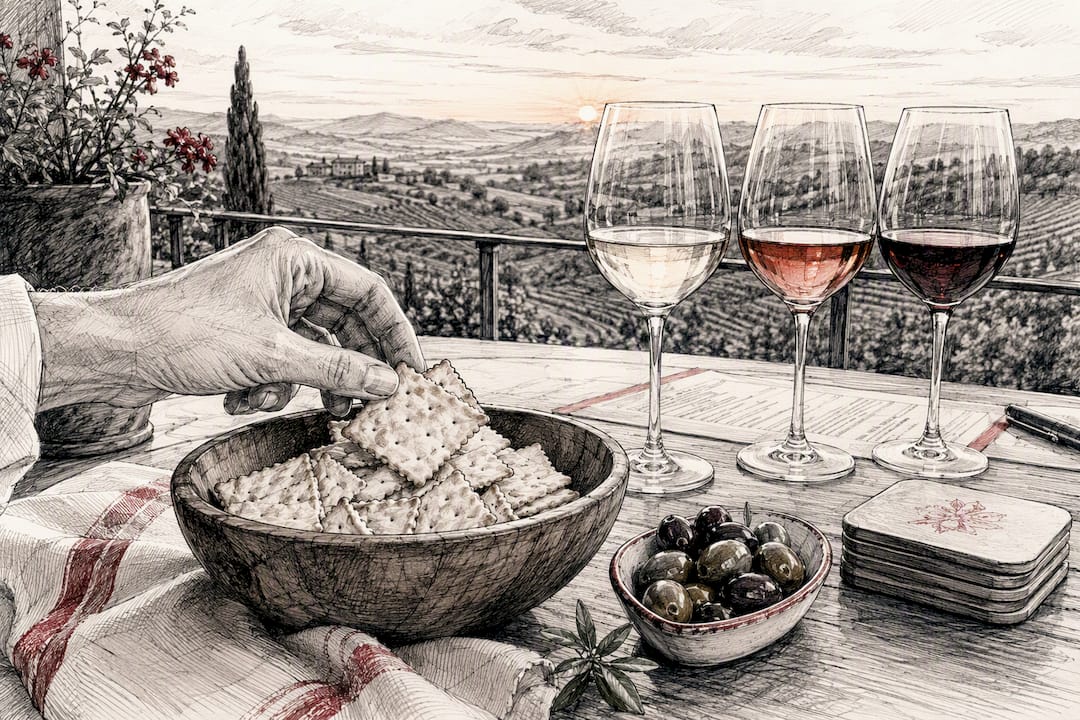
For a sample layout: think one wedge of hard cheese, one soft cheese, a small dish of olives or nuts, a couple of mini empanadas, and a neutral cracker in the centre. Keep every bite small enough to eat in one or two mouthfuls, so guests can sample without needing cutlery or making a mess. Our party finger food guide breaks down the five-category framework in more depth, and Wild Foodz’s plating inspiration is worth a look if you want the platter to photograph as well as it tastes.
Timing, quantities and low-pressure hosting
Wine tasting guides consistently recommend 15 to 20 minutes between major style changes so your palate can actually recover before the next pour lands on it. Jumping straight from a big Shiraz to a delicate Riesling without a break is how you end up tasting nothing but tannin for the rest of the night.
By the numbers: plan for 4 to 6 tasting bites per person across a two-hour tasting, scaling up slightly if the event is more casual grazing than structured flight.
- Offer 2 to 3 core snacks yourself, then invite guests to bring a bottle or a small plate. It cuts your workload and adds variety without extra planning.
- Always have water, napkins, and small discard bowls on the table. Spitting or tipping out a taste isn’t rude at a real tasting, it’s expected.
- Serve palate cleansers between the boldest wines, not just at the end.
Dietary swaps that keep every guest included
The easiest way to cover most dietary needs without overthinking the menu is a simple formula: one cheesy item, one vegetarian or vegan option, and one meat-based option on every platter. It’s a rule wine and food pairing guides return to again and again because it works without forcing you to build separate menus.
- Swap dairy cheese for a cashew-based alternative or marinated olives for vegan guests.
- Use rice crackers or vegetable crudités instead of wheat crackers for gluten-free guests; our gluten-free empanada dough guide covers a Latin-style option that works well here.
- Label allergens with small flags or handwritten cards rather than relying on memory once the wine starts flowing.
Señor Empanada’s take on tasting spreads
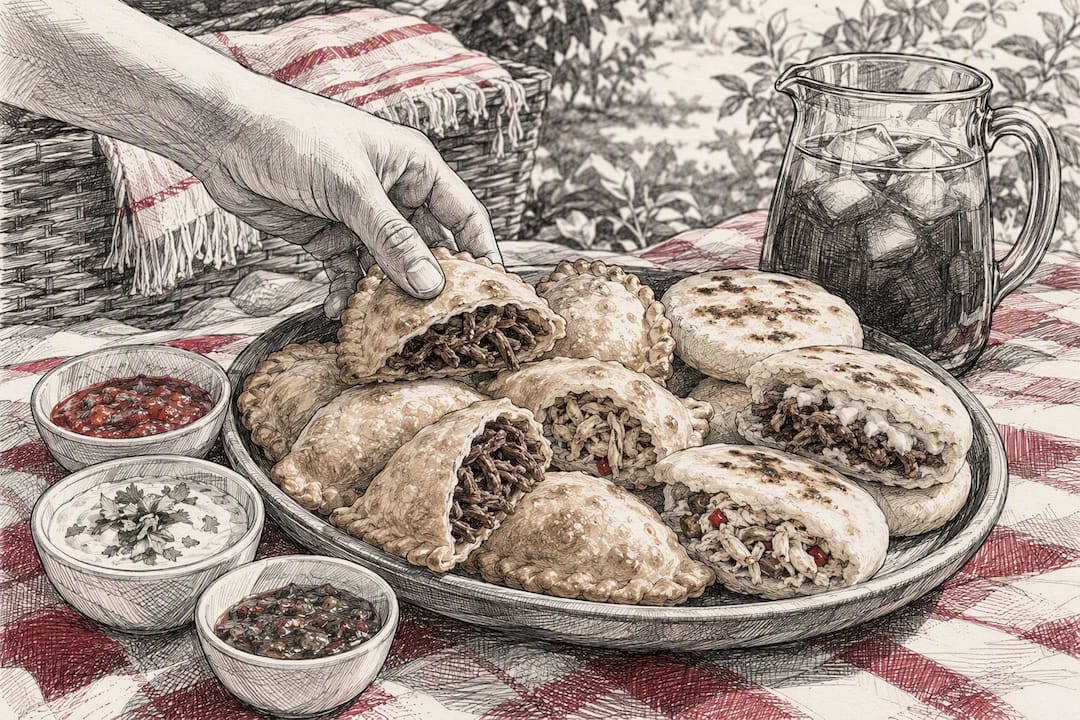
We build our fillings with tastings in mind: a Cheesy Empanada for lighter reds and rosé, a Traditional Beef Empanada for full-bodied reds that can handle richness, and our arepas for guests who want something a little lighter alongside whites. One or two mini empanadas per person per wine style is enough to add variety without overwhelming the platter. Every empanada reheats in minutes from frozen, which matters when you’re juggling pours and can’t babysit an oven. Our Latin appetiser guide has more on pairing empanada fillings with specific wine styles.
— Senor Empanada
Skip the prep and order the platter instead
Hosting a tasting shouldn’t mean spending your afternoon at the stove while your guests are due in an hour. Senor Empanada’s party packs give you a ready-to-serve spread of Traditional Beef, Cheesy, and vegetarian empanadas plus arepas, made from traditional recipes rather than assembled on the spot from a supermarket shelf. If your tasting is a small gathering, order a party pack; if it’s a larger event with a set guest count, our catering option scales the quantities and dietary mix for you. Check what’s available near you and place an order through Where to Buy before your next tasting, or browse kids party snacks if the guest list includes younger tasters too.
Sources
For deeper detail on pacing your palate, see Wine Enthusiast’s guide to preventing palate blowout. For accessible, budget-friendly pairing examples, Food & Wine’s sommelier-led snack guide is worth bookmarking. For hosting mechanics and Australian-specific tips, FU Wine’s home tasting guide rounds things out well.
- How to prevent palate blowout | Wine Enthusiast
- How to host a wine tasting party with little experience | WTSO
- 9 Costco snacks and their perfect wine pairings, according to a sommelier | Food & Wine
- 30 simple appetizers for wine tasting parties | Instacart
FAQ
What snacks go with wine tasting?
Cheese and charcuterie, a crunchy salty snack like popcorn or nuts, and a neutral palate cleanser such as plain crackers cover most wine styles without overcomplicating the menu.
What food should I eat during a wine tasting?
Stick to small, one or two-bite items, cheese, cured meats, nuts, and mild finger foods like mini empanadas, so you can sample multiple wines without a heavy meal dulling your palate.
What is the 20 minute wine rule?
It’s the guidance to wait roughly 15 to 20 minutes between major changes in wine style, giving your palate time to recover before tasting something very different.
What are some easy appetisers I can serve for a wine tasting?
Popcorn, salted nuts, cheese and crackers, and ready-to-serve options like Señor Empanada’s mini empanadas all require minimal prep while still pairing well across most wine styles.